Strategic Brand Activation Management Solutions
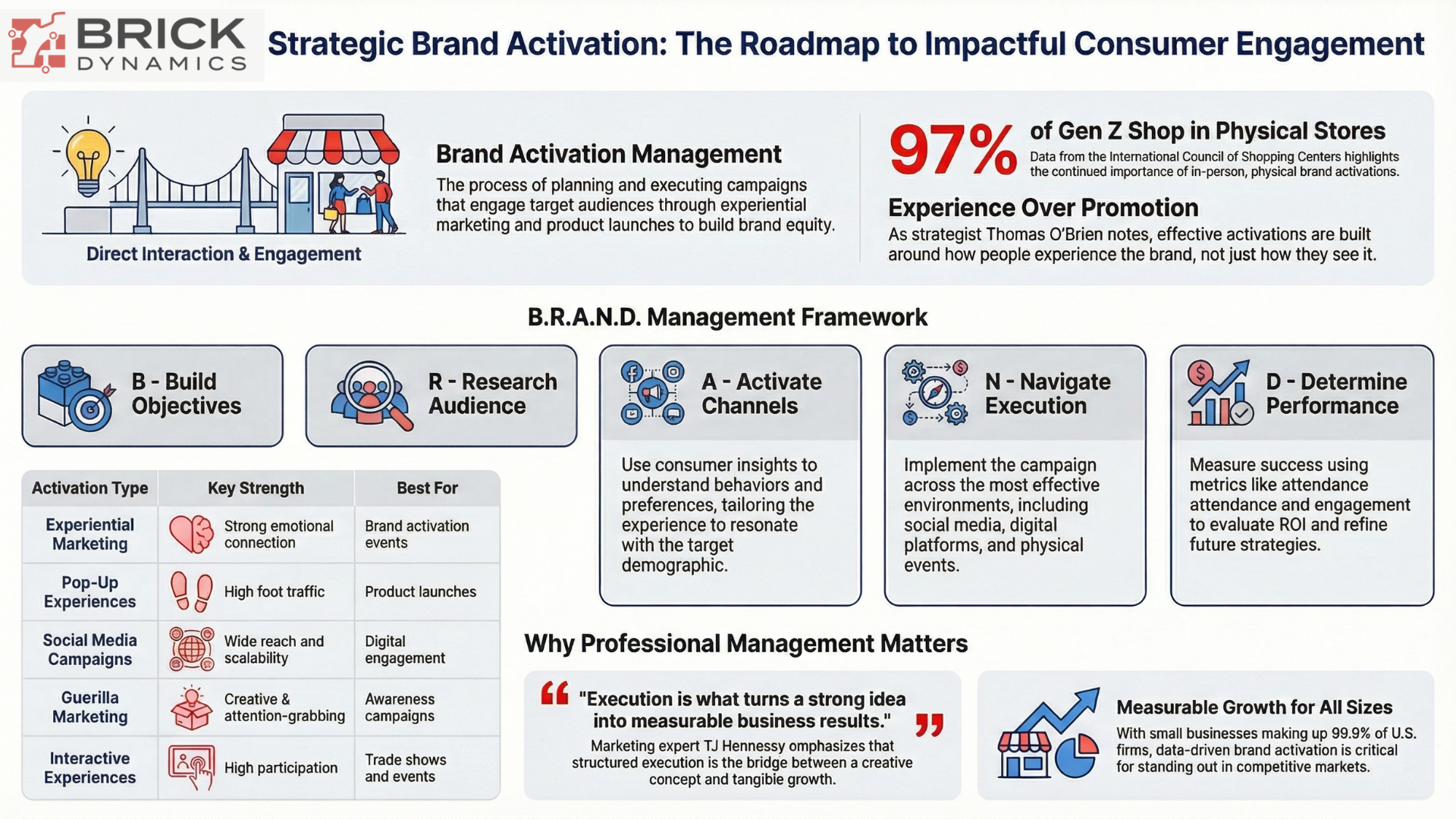
Brand activation management is the process of planning, coordinating, and executing brand activation campaigns that engage a target audience through direct interaction. It combines experiential marketing, brand activation events, and strategic execution to create meaningful interactions and engaging brand experiences. When done effectively, it helps increase brand awareness, build brand loyalty, and create a lasting impression on consumers.
Are you looking for a team that can manage your brand activation from planning to execution without the usual setbacks? Brick Dynamics supports businesses with brand activation management, handling logistics, coordination, and on-site delivery to ensure campaigns run smoothly across every stage. Contact us today to get the support you need to execute a seamless and impactful activation campaign.
The blog explains what brand activation management is, how it works using a structured framework, and how brands can execute, measure, and improve successful activation campaigns.
What Is Brand Activation Management?
Brand activation management refers to the planning, coordination, and execution of brand activation campaigns that engage a target audience through direct interactions. It focuses on creating engaging and interactive experiences that reflect brand values and strengthen brand messaging. These campaigns often include experiential marketing, product launches, and brand activation events across multiple marketing channels. The goal is to create memorable experiences that leave a lasting impression and build an emotional connection with consumers. This makes brand activation management an important aspect of modern marketing strategies.
We use brand activation management to ensure every activation campaign aligns with business goals and consumer expectations. We analyze consumer behavior, identify consumer preferences, and apply consumer insights to improve execution. Data from the International Council of Shopping Centers shows that 97% of Gen Z consumers shop at physical stores, reinforcing the importance of in-person brand activation and experiential marketing. A strong brand activation plan helps brands create meaningful interactions and connect with potential customers more effectively. We also focus on strengthening brand awareness, brand image, and long-term brand loyalty. When executed properly, it contributes to stronger brand equity and measurable outcomes.
How Does Brand Activation Management Work?

Brand activation management does not rely on execution alone. It succeeds because every part of the activation campaign is planned with intention and managed with precision. To guide this, we use the B.R.A.N.D approach, which focuses on how campaigns are structured, executed, and measured. This approach ensures that each stage contributes to the overall success of the activation strategy. It also makes it easier to track performance and improve future campaigns.
B- Build
Building objectives is the first stage, where we define clear goals for the activation campaign, such as increasing brand awareness, boosting sales, or improving customer engagement. We use these objectives to guide the activation plan and establish key performance indicators for success. Without clear goals, it becomes difficult to measure results or determine effectiveness. This stage ensures that every decision made during the campaign aligns with the intended outcome. It also sets the direction for the overall marketing strategy.
R- Research
Researching the target audience focuses on understanding consumer behavior, preferences, and expectations before execution begins. We use consumer insights to identify the target demographic and tailor the experience accordingly. A deep understanding helps create engaging and interactive experiences that resonate with potential customers. This step ensures the campaign reflects real audience needs rather than assumptions. It also improves the chances of creating meaningful interactions.
A- Activate
Activating across channels ensures the campaign reaches the right audience through the most effective marketing channels. We implement activation campaigns across experiential marketing, social media campaigns, and brand activation events in both digital and physical environments. Choosing the right channels improves reach and audience engagement. It also allows brands to interact directly with consumers in different environments. This stage brings the activation strategy to life.
N- Navigate
Navigate execution focuses on managing logistics, coordinating timelines, and ensuring the activation campaign runs smoothly. We oversee promotional materials, on-site operations, and consistency across touchpoints. Strong execution reduces risk and prevents disruptions during the campaign. It also supports engaging experiences and direct interactions with the audience. This stage is critical for delivering impactful brand moments.
D- Determine
Determine performance is the final stage, where we measure the success of the activation campaign using key metrics. We track social media engagement, event attendance, and customer feedback to evaluate results. These insights support ROI analysis and help refine future campaigns. In some cases, success depends on increasing brand awareness, while in others it focuses on boosting sales. This step ensures the continuous improvement and long-term effectiveness of campaigns.
Real Brand Activation Example

In one project, we supported a multi-location brand activation campaign for a product launch across several cities. Our team managed logistics, coordinated shipping, and handled on-site execution to ensure each activation event ran smoothly. This included setting up activation spaces, managing promotional materials, and maintaining consistent brand messaging across locations. As a result, the campaign achieved strong foot traffic and consistent audience engagement. The structured execution helped deliver a seamless experience across all touchpoints.
The activation succeeded because strategy and execution were aligned from the beginning. By centralizing coordination and tracking performance in real time, we reduced delays and maintained consistency across locations. This allowed the brand team to focus on engaging with consumers and creating meaningful interactions. It also improved delivery accuracy and campaign efficiency. This example shows how effective brand activation management directly impacts overall success.
What Are the Benefits of Brand Activation Management?

Brand activation management offers several advantages that help brands connect with consumers and improve overall marketing performance. These benefits go beyond visibility and focus on creating meaningful interactions that drive real results. When executed properly, brand activation campaigns support both short-term goals and long-term growth. They also help brands stand out in competitive markets. This makes brand activation management an important part of modern marketing strategies.
We use brand activation campaigns to increase brand awareness by placing brands directly in front of their target audience. Activations in everyday spaces, pop-ups, and experiential marketing events attract attention and create buzz quickly. These campaigns allow brands to interact directly with potential customers in real-life environments. This increases visibility and strengthens brand image. As a result, brands can expand their market reach and build a stronger presence.
We also focus on improving customer engagement and building deeper connections with consumers. Engaging and interactive experiences encourage participation and create an emotional connection with the audience. These meaningful interactions help transform potential customers into loyal customers over time. We design activation campaigns that create memorable experiences people remember and share. This strengthens brand loyalty and long-term consumer relationships.
Brand activation management also provides measurable outcomes that support better decision-making. By tracking key performance indicators such as social media engagement, event attendance, and customer feedback, we can evaluate campaign success accurately. According to the U.S. Small Business Administration, small businesses make up 99.9% of all businesses in the United States, highlighting the importance of structured planning and effective marketing strategies. This underscores the necessity of a data-driven approach in brand activation strategies. It also shows how activations contribute to overall business growth.
According to brand strategist Thomas O’Brien: “The most effective brand activations are built around how people experience the brand, not just how they see it.” This reinforces the importance of focusing on experience rather than just promotion. When brands prioritize engaging experiences, they create stronger emotional resonance with consumers. This leads to better brand equity and long-term impact, which also supports more effective brand activation campaigns.
How Do Different Brand Activation Strategies Compare?
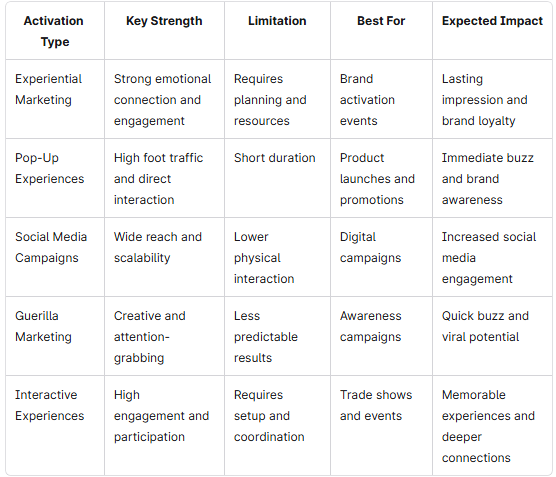
Not all brand activation strategies deliver the same results, which is why choosing the right approach depends on your goals, target audience, and available resources. Some strategies focus on visibility, while others prioritize engagement, data collection, or long-term brand loyalty. Understanding these trade-offs helps brands make better decisions when planning activation campaigns. Each approach has its strengths and limitations depending on execution. The comparison below highlights how different strategies perform across key factors.
What Challenges Arise in Brand Activation Management?
Brand activation management comes with challenges that can affect execution and overall success, especially in complex campaigns. These challenges often involve balancing creativity with structure while ensuring campaigns run smoothly across multiple touchpoints. Identifying these issues early helps reduce risk and improve efficiency during execution. We use structured planning to manage these moving parts effectively. Addressing these challenges is key to delivering successful brand activation campaigns.
One common challenge is managing budget constraints while still delivering engaging and interactive experiences. Brands often want high-impact activations but must work within limited resources. This requires balancing creative concepts with cost-effective strategies. In some cases, the right approach depends on the target audience, campaign goals, and available budget. Simpler activations can sometimes deliver stronger results than complex setups.
We also manage logistical coordination and performance tracking to ensure campaigns run smoothly. Managing timelines, promotional materials, and on-site setup requires precision across every stage. At the same time, measuring success can be difficult without clear key performance indicators and tracking systems. As marketing expert TJ Hennessy notes: “Execution is what turns a strong idea into measurable business results.” This highlights the importance of both structured execution and accurate performance measurement.
Many brands assume that creativity alone guarantees a successful brand activation, but this is a common misconception. Without clear objectives, proper planning, and defined key metrics, even strong ideas can fail. Another mistake is assuming bigger budgets always deliver better results, which is not always true. In many cases, simple and well-targeted activations perform more effectively. Addressing these misconceptions improves both execution and overall campaign success.
What Are the Next Steps in Brand Activation Management?
Improving brand activation management requires continuous refinement and a clear focus on performance. We use insights from past brand activation campaigns to guide future strategies and improve results. This helps ensure every activation strategy remains relevant and effective. It also supports stronger engagement and measurable outcomes over time. Taking the right next steps helps maintain consistency and long-term growth.
We recommend reviewing key performance indicators, customer feedback, and consumer data after each activation campaign. These insights help identify what worked and where adjustments are needed. We use this information to refine execution and improve future campaigns. In some cases, small changes can lead to better engagement and stronger results. This approach supports a more effective brand activation strategy.
We also focus on adapting to evolving consumer behavior and emerging marketing trends. This may include new digital channels, experiential marketing formats, or shifts in target audience preferences. Staying flexible allows brands to remain competitive and create engaging experiences. It also helps maintain relevance in a fast-changing market. This is essential for building lasting connections with consumers.
Ready to Empower Your Brand Activation Journey?
Brand activation management plays a key role in helping brands connect with their audience through meaningful interactions and engaging experiences. We combine structured strategy, real-world execution, and data-driven insights to deliver successful brand activation campaigns that create lasting impressions. This guide stands out by providing a clear framework, practical insights, real examples, and measurable strategies for better results. When these elements come together, brands can create impactful experiences that drive engagement, brand loyalty, and business growth. If you are planning a brand activation campaign, connect with Brick Dynamics and visit us to ensure your campaign runs smoothly from concept to execution.
Frequently Asked Questions
Here are quick answers to common questions about brand activation management and how it supports successful campaigns.
What Is Brand Activation Management?
Brand activation management is the process of planning, coordinating, and executing brand activation campaigns that engage a target audience through direct interaction. It focuses on creating meaningful interactions and memorable experiences that strengthen brand awareness and brand loyalty.
How Can Brand Activation Management Help My Business?
Brand activation management helps increase brand awareness by creating engaging experiences that connect directly with potential customers. It also supports customer engagement, builds emotional connection, and drives measurable outcomes such as social media engagement and boosting sales.
What Are the Key Components of Successful Brand Activation Management?
Successful brand activation management includes clear objectives, a defined target audience, strong brand messaging, and a structured activation plan. It also involves experiential marketing, engaging and interactive experiences, and tracking key performance indicators for measurable success.
How Do I Measure the Success of Brand Activation Campaigns?
Success can be measured using key performance indicators such as event attendance, social media engagement, customer feedback, and consumer data. In some cases, results depend on campaign goals, whether focused on brand awareness, engagement, or boosting sales.
What Are Some Examples of Successful Brand Activation Campaigns?
Successful brand activation campaigns often include pop-ups, product launches, experiential marketing events, and interactive experiences in high-foot-traffic areas. These campaigns create buzz, encourage social sharing, and build lasting connections with consumers.