
Experiential Brand Activations: Top Campaigns Of 2025
Experiential brand activations such as South by Southwest pop-ups and interactive takeovers in Times Square show how brands are using live environments to connect with audiences in more dynamic ways. These campaigns highlight how experiential marketing blends creativity, real-world interaction, and structured execution to deliver meaningful brand experiences. When executed effectively, they drive organic buzz, increase media impressions, and build stronger, longer-lasting audience connections.
Planning an experiential brand activation and need the right team behind it? Brick Dynamics partners with brands to coordinate logistics, product care, and on-site execution for experiential campaigns across multiple locations. Contact us today to bring your idea to life with a smooth, well-executed experience that connects with your audience.
This blog explores experiential brand activations, key components, and what separates top campaigns from the rest.
What Are Experiential Brand Activations?

Experiential brand activations are marketing campaigns designed to engage consumers through real-life interactions. These activations create direct connections between the brand and its audience. They often take place in pop-ups, festivals, corporate events, or high-traffic locations. The goal is to move beyond passive marketing and create memorable brand experiences. This approach helps brands build stronger emotional connections with customers.
These campaigns combine physical environments with digital elements to enhance engagement. Brands use tools like projection mapping, spatial audio, and AI-powered features. Interactive elements such as photo ops, live actors, and exclusive giveaways increase participation. These features turn attendees into active participants rather than observers. As a result, brands can create deeper engagement and stronger recall.
Key Components of Experiential Brand Activations

Strong experiential brand activations are built on a few core elements that shape how people interact with the brand. These elements work together to create a smooth and engaging experience from start to finish. When one piece is missing, the entire activation can feel disconnected or underwhelming. The goal is to create something that feels intentional, not thrown together. This is what separates average campaigns from memorable ones.
The overall environment plays a major role in how people experience the activation. A well-designed space should feel immersive and draw people in naturally. From the layout to the lighting and displays, everything should work together. When the environment feels complete, participants are more likely to stay and explore. This directly improves engagement and how long people interact with the brand.
People also need something to do once they are inside the space. That is where interactive moments come in, turning visitors into active participants. This could be a game, a product demo, or a simple hands-on activity. The more involved people feel, the more likely they are to connect with the brand. This is especially important for audiences that value participation and self-expression.
Technology can elevate the experience, but only when it is used with intention. Features like projection mapping, spatial audio, or AI-powered tools can make the activation feel more dynamic. At the same time, too much technology can overwhelm the experience if it is not aligned with the concept. In some cases, simpler setups perform better because they are easier to engage with. The focus should always remain on the experience, not just the tools.
Another important factor is how easily the experience can be shared. People naturally want to capture and post moments that feel exciting or different. This is why strong visual setups, photo opportunities, and influencer content matter. These elements help extend the activation beyond the physical space. As a result, brands benefit from increased visibility and organic buzz across social platforms.
Finally, every activation should be designed with long-term value in mind. Many campaigns now include ways to collect first-party data through sign-ups or digital interactions. This allows brands to understand their audience better and improve future campaigns. According to data from the U.S. Small Business Administration, businesses that use structured data and planning strategies can improve performance by up to 30%. This shows that the experience should not end when the event is over. Instead, it should continue to inform future strategy and growth.
Why Do Experiential Activations Matter?
Experiential brand activations have become more important as consumer expectations continue to evolve. People are no longer satisfied with passive advertising and want more engaging experiences. Brands now need to create moments that feel personal, interactive, and worth their time. This shift has made experiential marketing a key part of modern strategy. It allows brands to connect with consumers in a more meaningful way.
Another reason these activations matter is the level of competition in the market. Many brands are competing for attention across the same platforms and spaces. Creating a real-life experience helps a brand stand out in a crowded environment. It also gives consumers something they can remember and talk about. Expert insight from TJ Hennessy explains, “Experiences create emotional connections that traditional marketing cannot replicate.”
Experiential campaigns also play a strong role in building loyalty and long-term engagement. When people have a positive experience, they are more likely to return or recommend the brand. These activations create emotional connections that go beyond a single interaction. According to the International Council of Shopping Centers, 97% of Gen Z consumers visit physical stores, showing strong demand for in-person brand experiences. This demonstrates how the right setting amplifies engagement and enhances overall campaign results.
Industry expert Thomas O’Brien also emphasizes the importance of execution, stating, “A well-executed activation is what turns engagement into long-term brand value.” This reinforces the idea that strong logistics and planning are just as important as creativity. Without proper execution, even the best concepts can fall short. This is why experienced teams play a critical role in campaign success. It ensures that both the creative and operational sides work together seamlessly.
How Do Top Experiential Campaigns Stand Out?
Top experiential campaigns stand out because they balance creativity with structured execution and strong event logistics. In today’s experiential marketing space, brands are expected to create brand experiences that engage audiences while still delivering measurable results. Whether it is pop-ups, corporate events, or large-scale festivals like Austin City Limits, the goal is to connect with consumers in a meaningful way. To guide this process, we use the E.N.G.A.G.E approach to structure each activation. This framework helps brands move from concept to execution while improving audience engagement and overall campaign performance.
E- Entry Point
Every successful activation begins with a strong entry point that attracts attention immediately. This could be a pop-up shop in a busy city, a high-traffic venue like Times Square, or a branded installation at a festival. The goal is to create an easy and inviting way for participants to step into the experience. Strong entry points are especially important when targeting Gen Z audiences who respond quickly to visual and interactive environments. When done well, this stage helps raise awareness and sets the tone for the entire campaign.
N- Narrative
Once participants enter the space, the campaign needs a clear narrative that keeps them engaged. This is where brand activations move beyond visuals and focus on storytelling, self-expression, and community. A strong narrative connects the product launch or campaign message to the audience in a natural way. Many experiential campaigns today use influencer content, live actors, or themed environments to bring this story to life. As Thomas O’Brien explains, “A strong brand story is what turns a moment into a lasting brand experience.”
G- Generate Buzz
Top campaigns are designed to create organic buzz that extends beyond the physical event. This often includes shareable moments like photo ops, exclusive giveaways, and limited edition products that encourage social sharing. Social feeds and influencer content help amplify the campaign across digital platforms. Campaigns gain traction when participants feel excited enough to share their experience in real time. This is what turns a single activation into a wider marketing campaign with strong media impressions.
A- Activate Technology
Technology plays a major role in modern experiential marketing and helps create immersive environments. Brands now use AI-powered tools, projection mapping, and spatial audio to enhance engagement and create interactive moments. These tools are often used during product launches, brand activations, and even two-day events to keep audiences engaged. However, the focus should remain on the brand experience rather than the technology itself. When balanced correctly, technology supports creativity and improves how audiences explore the activation.
G- Gather Data
Data collection is now a core part of experiential campaigns and helps brands measure success. Many activations use QR codes, digital platforms, and sign-ups to capture first-party data from participants. This allows brands to understand customer behavior, preferences, and engagement levels in real time. The data collected can then be used to improve future campaigns and refine marketing strategies. For many businesses, this step is what connects experiential marketing to long-term growth.
E- Evaluate Impact
The final stage focuses on evaluating how well the campaign performed. This includes tracking engagement levels, foot traffic, and overall media impressions generated during the event. Some campaigns focus on immediate results like sales, while others prioritize brand awareness and customer connection. According to industry insights, campaigns that combine strong logistics with creative execution tend to perform better over time. Expert insights from TJ Hennessy note, “Execution is what determines whether a great idea actually delivers results.” This step ensures that every activation contributes to future success and continuous improvement.
Real Campaign Case Study

One example of experiential event execution involves multi-city pop-up activations supported by Brick Dynamics across several markets. In this case, our team managed inventory, coordinated shipping, and handled on-site setup for simultaneous brand activations in different locations. This included kitting giveaways, ensuring timely deliveries, and maintaining consistent brand presentation across each site. As a result, the brand was able to launch efficiently without delays or operational gaps. The activation showed how structured logistics support can directly improve execution and audience engagement.
The campaign stood out because it solved common challenges like fragmented vendors and inconsistent execution across cities. By using centralized tracking and local teams, operations stayed aligned from planning through completion. This allowed the brand team to focus on audience engagement instead of logistics coordination. It also reduced delays, improved delivery accuracy, and supported real-time adjustments during the event. This example highlights how strong production logistics directly impact the success of experiential campaigns.
How Do Different Experiential Campaigns Compare?
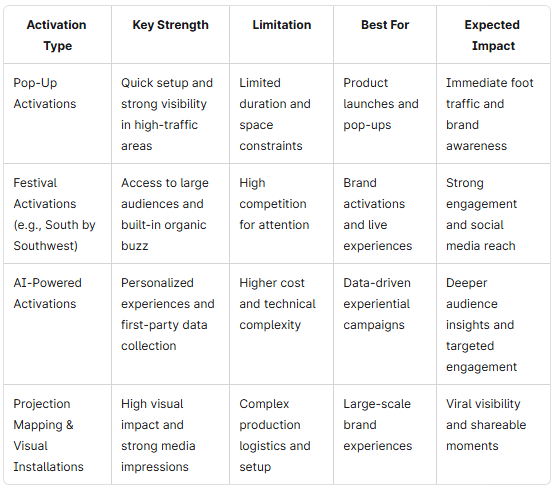
Different types of experiential activations serve different purposes depending on the goal. Some focus on visibility, while others prioritize audience engagement or data collection. Understanding these differences helps brands choose the right approach for each campaign. Every format comes with its own strengths and limitations. The table below highlights how they perform across key areas.
How Can Brands Implement Best Practices?
We help brands improve their experiential campaigns by staying aligned with current trends, audience behavior, and execution best practices. This includes adapting to new technology, shifting consumer expectations, and platform changes. Keeping up with these trends helps create more relevant and engaging experiences. It also ensures campaigns remain competitive in fast-changing environments. This is especially important for brands operating across multiple markets.
Building strong partnerships is another important strategy. Working with creative agencies and logistics teams improves execution. These partnerships bring experience and specialized skills to the project. They also help manage complex campaigns more effectively. This leads to better overall results.
Continuous improvement is key to long-term success. Brands should collect data and analyze performance after each activation. This helps identify what worked and what needs improvement. Small changes can lead to better outcomes over time. This approach guarantees consistent growth and success.
One common mistake brands make is focusing too heavily on visuals while ignoring logistics and execution. A campaign may look impressive, but fail if deliveries are delayed or setup is incomplete. Another misconception is that more technology always improves the experience, when in reality, it can overwhelm participants. In some cases, simpler activations perform better because they are easier to engage with. Avoiding these mistakes requires balancing creativity with practical execution.
The success of an experiential activation often depends on the campaign goal, audience, and location. For example, a pop-up shop in a busy city may prioritize visibility, while a private corporate event may focus on deeper engagement. In some cases, budget constraints may limit the use of advanced technology, requiring more creative solutions. Other campaigns may prioritize data collection over immediate sales. This is why strategy should always be tailored to the specific project.
Your Journey Into Experiential Brand Activations Concludes
Experiential brand activations continue to shape how brands connect with audiences in real life. The most successful campaigns combine creativity, technology, and strong execution. This guide stands out by providing a clear approach, real examples, data-backed insights, and an expert perspective. When these elements come together, brands can create experiences that drive engagement and long-term value. If you are planning an experiential activation, connect with Brick Dynamics to support your team with seamless logistics and execution.
Frequently Asked Questions
Here are answers to common questions about planning and executing experiential brand activations.
What Are the Key Elements of Successful Experiential Brand Activations?
Successful activations focus on engaging the audience, creating memorable interactions, and seamlessly integrating technology. Clear objectives, immersive experiences, and measurable outcomes are essential for impact.
How Can Brands Measure the Effectiveness of Their Experiential Brand Activation Campaigns?
Effectiveness is measured using audience engagement metrics, social media reach, media impressions, and conversion or sales data. Tracking first-party data ensures insights for future activations.
What Are the Emerging Trends in Experiential Brand Activations?
Emerging trends include AI-powered personalization, projection mapping, spatial audio, interactive moments, and sustainable or eco-friendly activation elements. These strategies create shareable moments and stronger brand connections.
How Can Small Businesses Create Impactful Brand Activation Experiences on a Limited Budget?
Small businesses can focus on high-engagement pop-ups, exclusive giveaways, interactive experiences, and social feed integration. Strategic planning and leveraging existing platforms maximize impact without overspending.
Which Brands Have Executed the Most Creative Experiential Activations?
Creative activations prioritize immersive experiences, live music or performances, influencer content, and limited-edition merch. These campaigns balance storytelling, technology, and audience participation to leave lasting impressions.