How Much Does 3PL Cost (2026)?
Third-party logistics (3PL) services do not have a single price. The rates depend on your order volume, how much inventory you have, and the services you need from your provider. Understanding how 3PL pricing works can help you to budget better and avoid surprise charges later.
At Brick Dynamics, we’ve spent the past three years helping businesses manage warehousing and logistics operations. Our network covers more than 65 metropolitan areas and is supported by over 500 local experts. With our single operational layer, we make it easier to manage local warehousing, transportation, inventory management, tracking, and on-demand support. If you’re looking for a 3PL partner who really understands your business, contact us to create a logistics solution tailored for you.
In this article, we will cover the recent costs for 3PL logistics services, the fees included, and the factors that influence prices.
How Much Would You Pay for 3PL Services in 2026?
3PL pricing has changed significantly over the last few years. In 2026, most brands pay between $2 and $3 per B2C order, with the survey average at $3.20. However, B2B orders are generally higher, averaging around $4.80 each. Additionally, you may pay between $2 and $5 per pick, between $20 and $40 per pallet for storage, and between $3 and $10 per return handled monthly.
Fulfillment pricing alone may seem cheaper at first because it includes only picking, packing, and shipping. All-in pricing includes storage, receiving, returns, and account management, which makes up most of your bill. Medium-volume sellers usually pay between $4 and $10 per order, while low-volume shippers (fewer than 200 orders each month) pay between $8 and $15 per order, as fixed costs are spread over fewer shipments.
The types of products you ship can affect what you pay. A brand that ships light goods with a single SKU will pay a lot less than one that ships heavy, multi-item consignments.
The table below shows the usual cost structure in 2026 for most brands. Use it as a reference point when evaluating any quotes you get.
| Cost Category | 2026 Benchmark |
|---|---|
| Pick & pack (first item) | Between $1.50 and $3.00, averaging around $2.75 |
| Additional item | Between $0.30–$0.75, averaging around $0.50 |
| Pallet storage (monthly) | $18 to $25 per pallet |
| Receiving/inbound | $5 to $15 per pallet |
| Returns processing | $2 to $5 per return |
| Setup fee | Can cost between $250 and $1,000, charged by about half of providers |
| Monthly minimum | Around $517 on average |
| All-in cost per order (mid-volume) | $4 to $10, excluding carrier charges |

What Are the Fees Included in 3PL Costs?
While 3PL quotes vary, most include the same basic fees. It’s much easier to compare providers if you know what each charge entails. Below is a breakdown of the most common fees and what impacts them.
- Inbound receiving and inventory check-in
- Storage by pallet, bin, shelf, or cubic foot
- Pick-and-pack fulfillment
- Packaging materials and labeling
- Shipping and transportation
- Returns and reverse logistics
- Value-added services such as kitting or assembly
1. Inbound and Receiving Fees
Before inventory hits the shelves, it must be received, unloaded, and inspected. Most 3PLs charge between $5 and $15 per pallet or $250 and $500 per container to cover this. Counting stock and moving it to the final location are also generally included in this fee. Some providers may charge per pallet, while others may charge by the unit or by the hour.
2. Storage Fees
After your products are checked in, storage becomes your largest ongoing expense. While most 3PLs charge between $18 and $40 per pallet, the actual cost varies by the warehouse location and the amount of space you occupy. If you have less inventory, you may be charged per bin or per shelf. Some 3PLs charge by cubic feet, which is perfect for irregularly shaped or bulky items. Watch out for long-term storage fees because if your inventory stays for more than 90 or 180 days, rates can jump to 1.5 to 3 times the normal rate.
3. Pick-and-Pack Fees
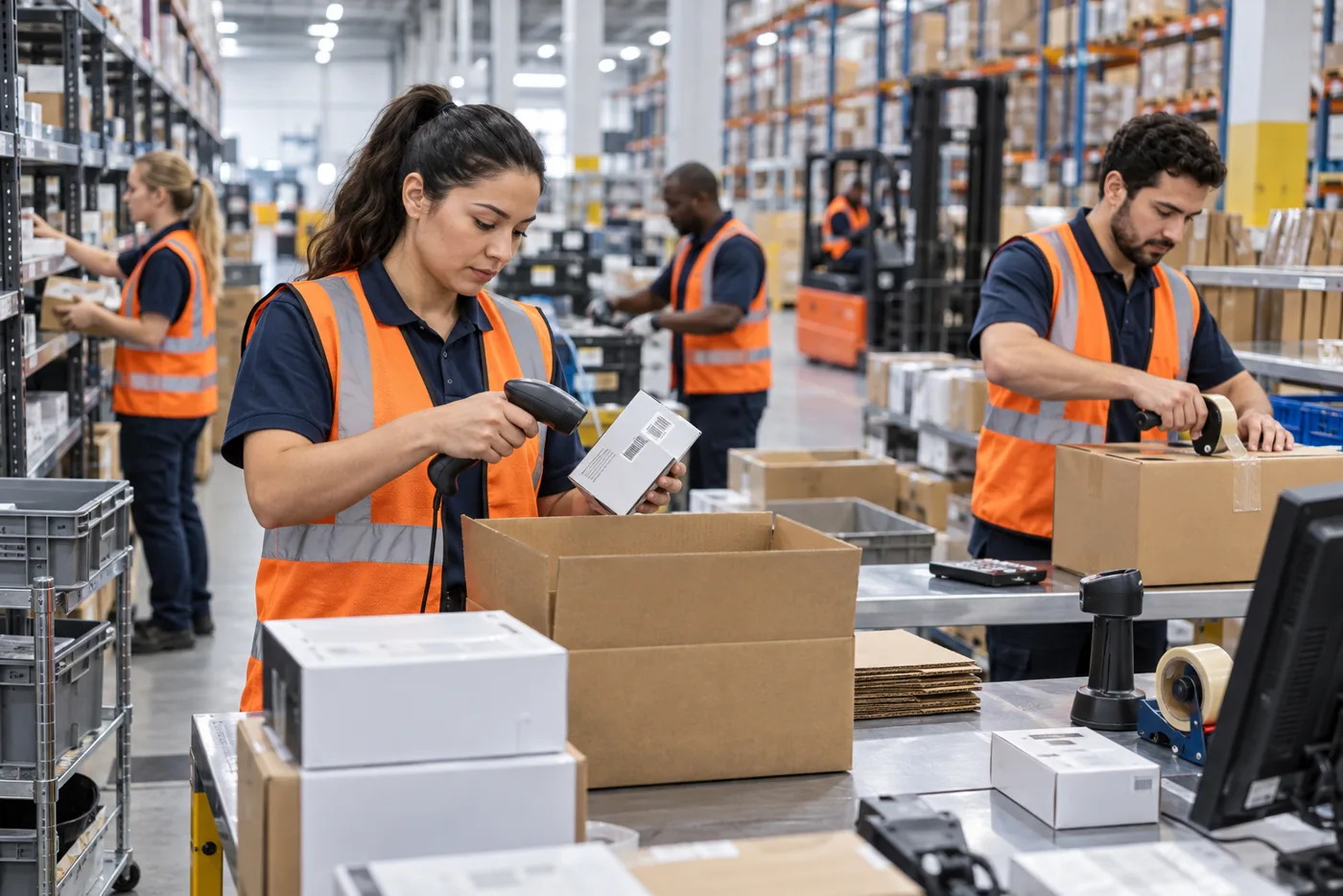
This charge includes everything from locating your products in the warehouse to packing them and getting them ready for shipment. For the first item in an order, you generally pay between $1.50 and $3.00, and each further item is usually an extra $0.30 to $0.75. Packing and boxing are generally covered, but a few providers may charge separately, so it’s a good idea to verify.
4. Packaging Costs
Packaging costs can add up quickly, even when each item seems cheap. Boxes and mailers may be priced at cost, marked up, or charged as part of your pickup fee. Labels and documentation also incur a small charge per order. Custom packaging, such as branded boxes or special materials, generally costs more.
5. Shipping and Transportation Costs
Shipping is often the most expensive part of working with a 3PL. It can sometimes increase your handling costs by as much as four times. However, the amount you pay the carrier depends on the package weight, its dimensions, and the level of service you select. Shipping distance matters too because the farther a package is from the warehouse, the more it will cost to deliver.
6. Returns and Reverse Logistics Costs
Each return generally includes a processing fee of $2 to $5, which covers inspection and entry into the system. Once the item has been inspected, the logistics provider decides whether it can be put back into stock, refurbished, or discarded.
7. Value-Added Services
Beyond the basic fulfillment fees, you may also want extra services that can increase your bill. For instance, kitting is generally charged per kit. Separate charges apply for assembly and labeling whenever preparation work is required before shipping. If the products are fragile, large, or hazardous, you should also expect special handling fees.
Other services, such as tagging or quality inspections before storage, can also add to your total charge. It is always a good idea to confirm exactly what is included and what costs extra before signing a contract. Once you know what each fee entails, it becomes much easier to compare quotations from different 3PL providers and avoid surprises down the line.
How Do 3PL Pricing Models Work?
Different 3PLs use different methods, and if you choose the wrong type, you might end up paying more than you intended. With the global 3PL market projected to hit $1.46 trillion in 2026, according to Research and Markets, providers are competing harder than ever, which means more pricing models to consider.
Some 3PL services may offer per-order pricing, which charges one flat fee per order, regardless of how many items it contains. This method works well for brands with a single SKU. Other services may use per-item pricing, which charges separately for each unit picked. For example, if picking the first item costs $2.75 and each additional item adds $0.50, a three-item order would total $3.75 under the per-item pricing system.
Cost-plus pricing charges your actual warehousing fees together with a fixed margin. Hybrid pricing combines both methods. You generally pay a flat rate per order and, in addition, pay extra for each item if the number of items in your order exceeds a certain threshold. This type of pricing can suit brands whose order quantities vary greatly from month to month.
Most 3PLs also impose monthly minimums, usually amounting to about $500, so if the amount of your fees is below that figure, you have to pay the difference. Lastly, customized pricing is arranged directly. It can be useful for brands with high volumes or special product requirements that don’t match the standard rate card.
Which Pricing Model Fits Your Business?
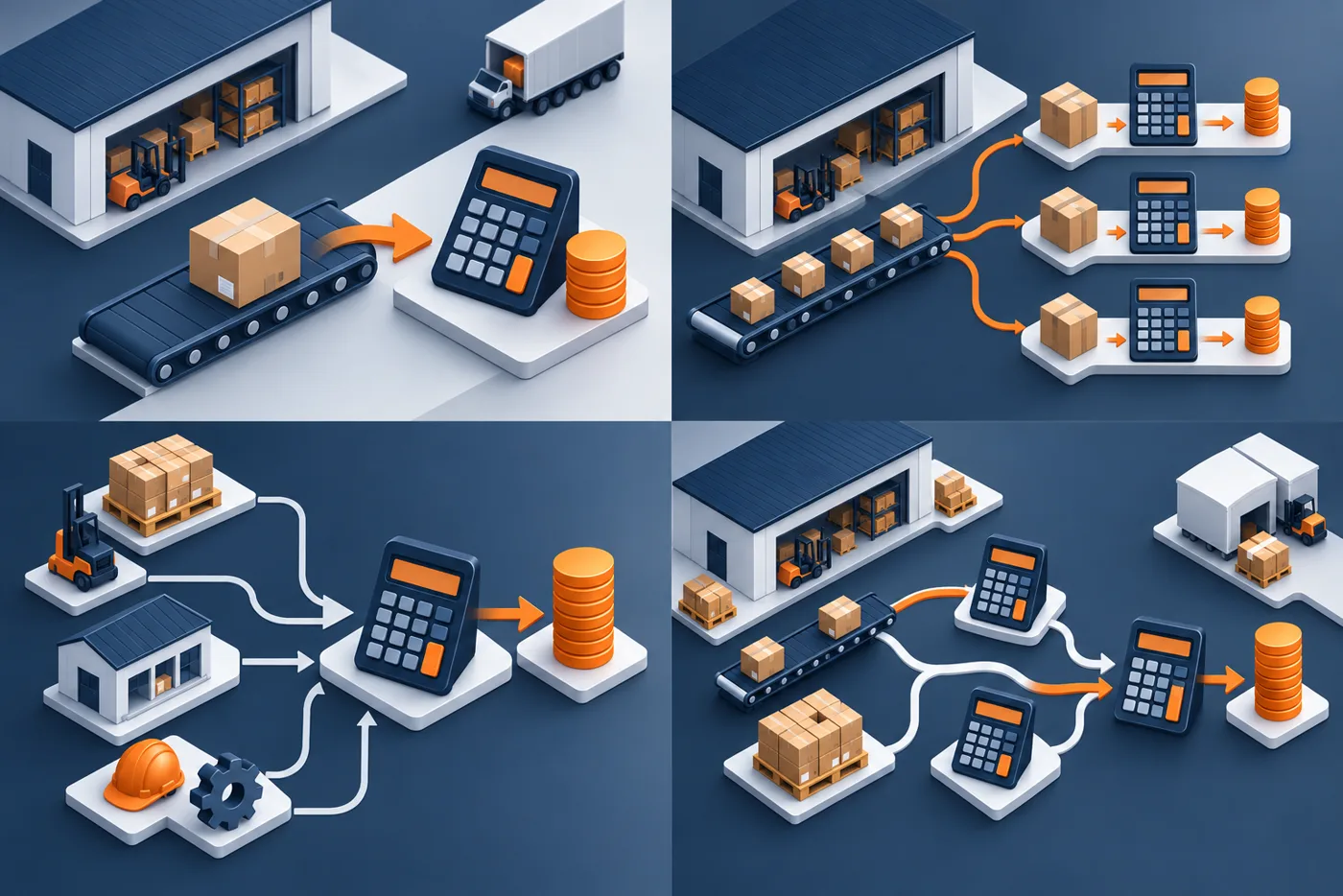
The right pricing model depends on your customers’ orders, not just which one looks cheapest at first. The table below briefly explains the common pricing models and how each option works so you can choose the one that best fits your orders.
| Pricing Model | Best For | Perks |
|---|---|---|
| Per-order | Brands shipping mostly single-item orders | Simple and predictable, but multi-item orders can get pricier than expected. |
| Per-item | Multi-item orders | Costs scale with complexity, so bigger orders cost more, not less |
| Cost-plus | Brands that want full visibility into actual costs | Transparent billing, but requires trading simplicity for detail |
| Hybrid | Growing brands whose order profiles keep shifting | Flexible as you scale, but harder to predict month to month |
How Much Does Onboarding and Setting Up a 3PL Cost?
Setting up a 3PL generally costs between $250 and $1,000, including paperwork, contract review, and the provider’s initial account configuration. Once that’s done, your current stock is received, counted, and entered into the 3PL’s system as part of the inventory onboarding process.
If you are integrating automation, technology fees can rise quickly. Linking your current systems to the 3PL’s platform requires considerable engineering work, which increases costs. But using APIs and configured systems can make it easier to handle your order data. This feature becomes important as volumes increase. A few 3PLs offer this as part of their onboarding process, while others charge extra depending on how custom the integration has to be.
Custom implementation can be expensive since it involves starting from scratch rather than using existing frameworks. Setup fees aren’t fixed, and many 3PLs are willing to drop them if you request it, especially when you’re bringing in large volume or signing up during a slow period. These fee waivers aren’t always advertised, so it’s good to ask about them before you agree.
What Are the Factors that Affect 3PL Costs?
The amount you pay depends on your order volume, the items you ship, your customers’ locations, and the kind of technology you require. If you know these factors, you can estimate your total costs rather than relying on a general rate card. Common factors include:
- Business size and monthly order volume
- Product size, weight, SKU count, and handling complexity
- Warehouse location and distance to customers
- Technology, integrations, and automation requirements
1. Business Size and Order Volume
The more shipments you make, the better the rates you get. If you’re shipping fewer than 200 orders a month, you’ll probably pay more per order than a large brand that ships thousands. Fixed costs (such as account management fees and warehouse space) are spread over fewer shipments. This makes volume very important because if your orders don’t reach the monthly minimum, you’ll have to pay the difference.
2. Product Size, Weight, and Complexity
Larger, heavier products cost more to store, pack, or ship than smaller, lighter ones. Fragile or special items require extra care and more careful packaging, which increases both time and cost. The number of SKUs you carry is also a factor. The more product types you have, the more work there is in managing inventory. And if your customers are likely to buy multiple items at once, your fulfillment costs will be higher than if most orders consist of a single item.
3. Warehouse Location and Shipping Distance
Where you store your inventory strongly affects how much you pay for shipping. If your warehouse is closer to your customers, you will pay less for shipping. You may also be able to reduce shipping costs by using more than one warehouse. However, keep in mind that keeping inventory in several locations will involve extra work and extra cost.
4. Technology and Automation Requirements
If you link your systems, such as your storefront or your inventory software, to the 3PL’s platform, you’ll save yourself the need for manual tasks. But this costs money. For real-time inventory tracking or automated workflows, you may end up paying more.
Although the initial cost can pay off over time, warehouse automation can reduce labor costs by 25 to 30 percent and increase pick accuracy to nearly 99 percent, according to Sellers Commerce. Additional costs are incurred when custom workflows are needed for specific packaging, labeling, or compliance situations.
How Do You Estimate Your 3PL Costs?
Once you know what affects pricing, you can calculate your own 3PL costs without waiting for a quote. To get an estimate, list out every fee that could apply. This can include receiving, storage, fulfillment, packaging, shipping, returns, and any extras like labeling or kitting fees. You can also work out your receiving costs based on how often and how much inventory you send in.
Calculate your storage costs based on the number of pallets or units you expect to have. Then add fulfillment, packaging, and shipping costs, since these are generally the largest expenses. Be sure to include returns, any value-added services, monthly minimum charges, and any peak-season surcharges that may apply.
The formula that you can use is as follows: total 3PL cost equals the sum of receiving, storage, fulfillment, packaging and shipping, returns, value-added services, and other applicable costs.
Suppose you handle 1,000 orders each month, with receiving costs of $300, storage at $800, fulfillment at $2,750, and packaging plus shipping at $4,500. That brings your minimum monthly fee to $8,550, putting your average cost per order at $8.55. Running these numbers before agreeing to a contract helps you compare providers accurately. It can also help catch hidden costs that don’t match your actual order pattern.
How Much Could a 3PL Cost Per Month?
While prices vary by provider, you can estimate costs by running the numbers. For a small business that ships less than 200 orders each month, your monthly fee could be between $2,100 and $3,200. This is because fixed costs and minimums are spread over fewer shipments.
If your business ships between 500 and 2,000 orders per month, you’ll likely end up spending between $4,000 and $10,000 per month. Those running high-volume operations and sending thousands of orders each month can have bills ranging from $28,000 to $50,000 or even more, especially if they use more than one warehouse or select premium service levels.
Suppose you handle 1,200 orders each month, with the first item averaging $2.75 and each additional item costing $0.50. If you also add $2,000 for storage, packaging, and shipping, your total monthly cost will be around $5,300, or about $4.42 per order. However, these figures are given merely for illustrative purposes and should not be taken as a quote for your business. Your real costs could be quite different, depending on factors such as the number of SKUs, product size, return rate, and the number of warehouses you use.
For instance, two companies that ship the same number of orders could end up paying very different amounts. For example, one might ship fragile products while the other ships simple, light ones. Your bill can also increase or decrease because of seasonal fees, storage penalties, and minimum charges. The only way to get a realistic estimate is to work out the figures based on your own order pattern.
What Are Some Hidden 3PL Fees You Should Watch Out For?
The pick-and-pack rate on a 3PL’s homepage rarely tells the whole story. For most brands, the real surprise shows up as the monthly minimum. If your orders don’t add up to the usual $500 threshold, you still owe the gap. So you can end up paying more than you planned without realizing it.
Account management may also cost extra. This depends on whether support is included or billed separately. Seasonal charges can also change quickly, as peak surcharges from October to January can increase the price by $0.40 to $1.00 per package, while fuel surcharges vary throughout the year with carrier rates.
Storage and handling fees often hide in the fine print. If your inventory sits for over 90 or 180 days, long-term storage rates, sometimes 1.5 to 3 times higher, can apply. Special handling for fragile, bulky, or hazardous items usually brings extra fees as well. Kitting, labeling, and prepping products add more per-unit charges that add up quickly. And returns and inbound processing are typically $2 to $5 per item, plus disposal fees for anything that can’t go back on the shelf.
Inventory adjustment fees can show up after stock audits, and many brands only find out when they receive the bill. While none of these fees alone is enough to stop a deal, collectively they can turn a reasonable rate into an expensive contract. To avoid being caught off guard, always request a complete list of fees before agreeing to anything.
How Do You Compare 3PL Quotes?
Comparing quotes gets a lot easier once you have a full fee schedule that covers everything from receiving and storage to packaging and returns. And don’t be shy about asking each provider what their monthly minimum is. A low headline rate can still leave you with a bigger bill if that minimum is steep.
Don’t forget to check how shipping is handled. In some cases, carrier costs are included in the pickup fee, but in others they are charged separately. This can significantly affect your total bill.
Be especially careful with storage charges, since providers calculate them differently. Find out whether storage is charged per pallet, per bin, or per cubic foot, and make sure you know which method applies to your products. Also ask about any additional charges that may not be listed on the main rate card.
Check peak-season pricing. Surcharges from October to January can add up fast. If a provider can’t clearly explain how these charges will hit your bill, consider it a red flag. And once you’ve got all the details, ask each provider for a sample invoice. That way, you’ll see exactly how every fee shows up on a real bill.
Always compare costs based on your actual order volume, not just an average. Pricing can change a lot as your business grows. Also, check the contract for things like how much notice you’ll get before rate increases and whether you’re locked into a long-term deal. A quote that looks cheap up front can get expensive if rates jump unexpectedly.
Are 3PLs Cheaper Than Managing Logistics In-House?
The answer to this depends on your operations. Handling logistics yourself involves dealing with a long list of separate costs that add up faster than you’d expect. Simply renting a warehouse can set you back thousands each month, before you even think about hiring staff.
With in-house logistics, you’ll also have to buy equipment, purchase order-management software, and ensure packaging materials are always available. And all this can get really expensive and overwhelming. Don’t forget transportation, utilities, insurance, and the management time required to keep everything running. While each of these expenses may seem cheap on its own, together they add up to a substantial fixed cost.
When you outsource to a third-party logistics provider, most of those costs are bundled into a few expenses. You are charged for storage, receiving, and fulfillment based on your actual usage. Shipping is either included or billed separately, but in most cases you receive better rates than you would if you handled it yourself. Third-party logistics providers also offer technologies such as inventory tracking and order routing, removing the need to buy separate software.
If you need your goods kitted, labeled, or given special handling, these services are available when required, eliminating the need to hire dedicated staff. It’s not just about cost either. According to ClickPost, 91% of businesses that outsource to a 3PL report improved customer satisfaction and stronger supply chain results.
It only makes financial sense to outsource when your order volume begins to increase, since the fixed costs of having employees on site do not scale as efficiently. It’s also a major benefit when you are entering new markets, since a third-party logistics provider already has warehouse space and staff available.
Certainly, this comes with some compromises. You will lose some day-to-day control over your inventory and will have to depend on your provider’s performance and communication. So it is essential to choose a capable 3PL partner.
Contracts may include minimum commitments and specific requirements, such as special packaging or compliance, which can increase costs. The best choice depends on your actual volume and future growth plans, so consider the advantages and disadvantages before deciding.
How Can Brick Dynamics Help Businesses Manage Their 3PL Costs?
Most 3PLs stop at basic pick-and-pack services, leaving you to figure out the rest, such as local logistics and market expansion, on your own. Brick Dynamics takes a different approach. We connect local warehousing and first- and last-mile logistics, so your inventory moves smoothly from storage to your customers’ doors.
You get real-time inventory visibility, which means fewer adjustment fees and stockouts. Returns flow through the same system, with no separate provider or extra fees. Plus, our local field teams manage on-the-ground operations, giving you hands-on support most 3PLs don’t even offer.
Here is an example of how it works in practice. Suppose a consumer brand wants to enter 10 new metropolitan areas without having to lease warehouses or recruit local teams. Rather than spending months and large amounts of money setting things up from the beginning, it can make use of Brick Dynamics’ ready-made network of warehouses, vehicles, and field teams. As a result, it could start operating in new markets within weeks instead of quarters, while avoiding the fixed costs associated with rent, equipment, and management overhead for each location.
This flexible infrastructure is real. For example, Stack expanded into 65 or more markets and achieved first-year revenues of over $3 million without opening a single warehouse. This was supported by AI-powered job routing and smooth operations. With Brick Dynamics, there’s no need for you to start from scratch; you obtain a flexible operating layer that takes on the demanding tasks.
How Do Businesses Reduce 3PL Costs?
Reducing 3PL costs is all about maximizing efficiency. Combine smaller orders into fewer, larger shipments to save on per-package fees. Use right-sized packaging to trim both material costs and those sneaky dimensional weight charges from carriers. Keep your inventory counts accurate so you don’t get hit with adjustment fees or reorder stock you already have.
Reduce excess inventory because unsold items sitting in storage can accumulate long-term fees. And don’t forget location. Choosing a warehouse closer to your customers means lower shipping costs and faster deliveries.
As your order volume grows, negotiate better rates because most 3PLs offer volume discounts. Cut any value-added services you don’t need, like extra kitting or fancy packaging. Use technology to closely monitor inventory and orders so you can catch inefficiencies and avoid surprise fees.
Check your invoices regularly, because billing mistakes happen more often than you’d think. And it’s smart to shop around every now and then, even if you’re happy with your current provider. Pricing and service levels change over time.
How Much Will You Actually Pay for 3PL Services?
What you pay depends on your monthly order volume, product mix, warehouse location, and the services you actually use. Some small businesses spend a few thousand dollars a month, while bigger brands might see bills in the tens of thousands. Both could be totally normal. The real trick is figuring out which fees apply to you, and getting providers to show you a full breakdown.
If all the numbers still feel overwhelming, you’re not alone. That’s why the right partner matters. A good 3PL won’t just throw out a rate. They’ll help you understand what you’re paying for and why. For many growing businesses, outsourcing is actually less expensive than handling everything on your own.
At Brick Dynamics, we’ve spent the past three years helping brands grow by handling logistics in over 65 cities. Powered by 500+ local experts and a 98.5% on-time record, your 3PL needs are safe with us. Reach out today, and let’s figure out how to scale your operations.
Frequently Asked Questions
Outsourcing logistics can get confusing. If you still have questions about 3PL pricing, below are quick answers to the most common questions brands usually ask.
How Much Does 3PL Warehousing Cost?
Pallet storage usually costs between $18 and $40 per pallet per month, depending on the location and how much space you need. If you don’t have much inventory, bin or shelf storage is cheaper and often a better fit.
How Much Does a 3PL Cost per Month?
If you’re a small business, 3PL services may cost between $2,100 and $3,200 a month. Growing brands usually spend $4,000 to $10,000 monthly, while high-volume operations can spend $28,000 to $50,000 or more, depending on storage, shipping, returns, and service levels.
What Are the Factors that Influence the Costs of 3PL?
Order volume, product size and weight, warehouse location, shipping distance, SKU count, return rate, and technology needs all influence 3PL costs. Higher volumes may lower the cost per order, while oversized products, complex handling, multiple storage locations, and custom integrations generally increase the total.
Do 3PL Companies Charge Monthly Minimums?
Yes. Most 3PLs have a monthly minimum, which averages about $500 in 2026. If your total fees don’t reach that threshold, you’ll still owe the difference. Confirm how storage, receiving, and returns count toward the minimum before signing.
Are Shipping Costs Included in 3PL Fees?
That depends on the provider and the contract. Some 3PLs bundle carrier charges into fulfillment fees, while others list shipping separately. Ask whether fuel, residential delivery, dimensional weight, and peak-season surcharges are included so you can compare quotes on the same basis.
Are There Any Hidden Fees Associated With 3PL Services?
Yes. Common hidden charges include monthly minimums, long-term storage, inventory adjustments, packaging markups, account management, return processing, and peak-season surcharges. Request a complete fee schedule and a sample invoice before signing so you can see when and how each charge applies.
How Do I Compare 3PL Quotes?
Don’t just look at the pick-and-pack rates. Compare the total estimated costs based on how many orders you actually ship. Ask every provider for a sample invoice and a full fee schedule, so you can see exactly what you’d pay.