
Product Sampling Strategy
A product sampling strategy is a planned approach that gives potential customers free product samples to encourage trial and future purchases. If you’re a new business, product sampling is a smart way for brands to reach new customers, enter new markets, build awareness, generate social proof, and gather real feedback through events, pop-ups, or in-store campaigns. Done right, sampling turns a simple product trial into an opportunity to build genuine customer connections and drive sales over time.
At Brick Dynamics, we understand the operational challenges behind a successful product sampling campaign. Our local operations infrastructure helps brands with warehousing, inventory management, kitting, first- and last-mile delivery, event setup, and on-the-ground execution across multiple markets. By managing the physical logistics, we help keep products where they need to be, when they need to be, so your marketing team can focus on creating meaningful customer experiences. Contact us to explore how we can help bring your product sampling strategy to life.
This blog covers what product sampling is, the importance of product sampling, the strategies brands can use, and how to plan, execute, and measure successful sampling campaigns.
What is Product Sampling?
Product sampling is all about giving people an opportunity to test your product before they commit to buying. For decades, many brands distributed free samples in stores, tucked them in with purchases, or sent them straight to peopleâs homes. Whenever a brand wants to break into a new market, sampling is often the go-to strategy. Today, youâll find sampling everywhere: in stores, at special events, direct mail sampling, and even via online campaigns that deliver physical products right to customersâ doors.
Thereâs no one-size-fits-all approach to sampling. The right format depends on how and where a brand wants to connect with people. In-store sampling lets shoppers try products in your store, while they decide what to buy. Event-based sampling brings products under the gaze of a target market. And with digital sampling, brands use digital tools to find interested customers and send samples right to their homes, combining the reach of digital with the impact of a real product experience.
Unlike regular ads, product sampling is a powerful tool that lets people actually experience what you offer, not just hear about it. That in person moment sticks with them, making your brand more memorable and helping customers feel good about trying something new. When your product delivers, that first taste can turn into repeat purchases and lasting loyalty.
What is the Importance of Product Sampling?
Product sampling gives potential customers a chance to experience your product before committing to a purchase. That in person interaction can reveal details that advertising cannot fully communicate, such as taste, texture, product quality, scent, performance, or ease of use. Plus, it gives brands a real window into how customers feel about their products, helping shape future campaigns.
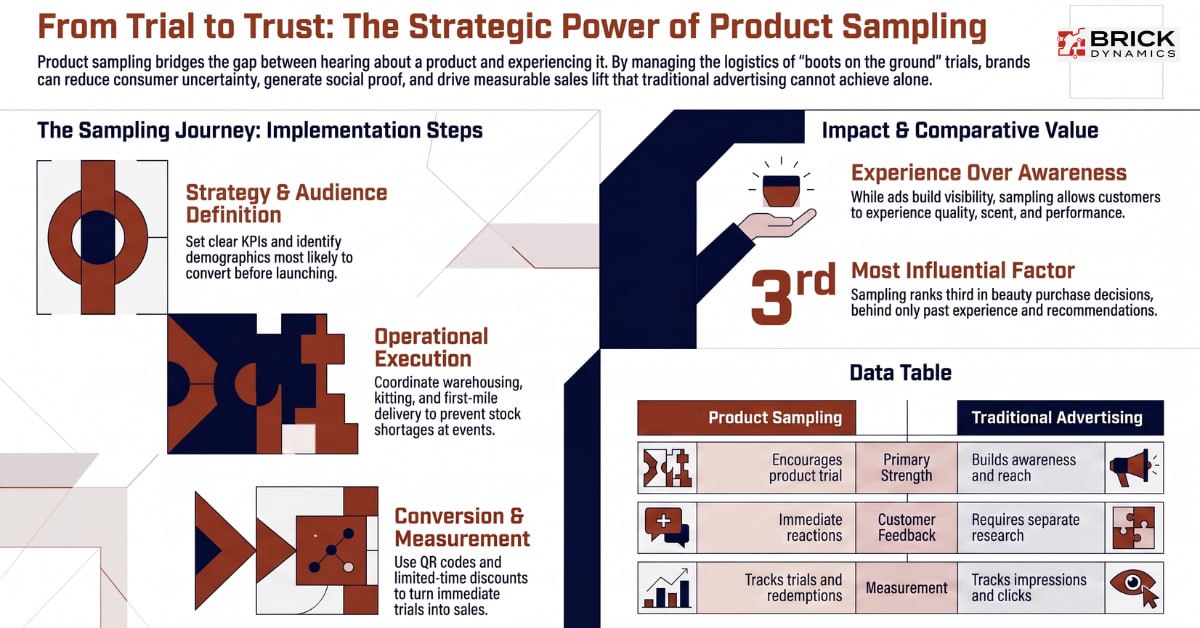
Sampling can also influence purchasing decisions by reducing uncertainty around a new or unfamiliar product. Vogue Business reported that sampling ranked 3rd among factors influencing beauty purchasing decisions, behind past experiences and personal recommendations. The best results come when brands target the right people, in the right place, with the right product and have a clear goal in mind.
When you get sampling right, the impact goes far beyond just one sale. A positive, relevant experience not only encourages an immediate purchase, but also helps build a lasting relationship with your customers.
When Should You Use Product Sampling?
Sometimes, people need to experience a product firsthand before theyâre ready to buy, and thatâs where product sampling really shines. Itâs a smart move when youâre launching something new, stepping into a fresh market, or trying to win over unfamiliar customers. The U.S. Census Bureau recorded 531,423 new business applications in June 2026, showing how many new businesses are entering the market. So standing out matters now more than ever.
For brands entering crowded markets, creating a memorable customer experience can help them stand apart. And if youâre offering something premium or a bit unfamiliar, sampling takes the pressure off by letting people try before they buy, with no risk.
Sampling can also support a retail launch, increase trial for an existing product, or bring back previous customers. Whether itâs at a pop-up, an event, or a field marketing campaign, handing out samples creates real moments of connection. The key is choosing sampling when product experience, trial, or direct engagement can influence the customer’s decision. Sometimes, a well-timed campaign is all it takes to get people excited about what you have to offer, instead of waiting for them to make the first move.
Product Sampling Marketing Strategies
Product sampling marketing campaigns work best when the strategy is in line with the audience, product, and setting. Brands can target specific demographics based on interests, purchasing habits, location, or customer profiles. Data analysis can also help identify the right locations and times, making each sample more relevant to the people most likely to buy.
The experience itself should give customers something to remember the brand by. Think interactive demos, tastings, fun challenges, or hands-on activities that turn a simple sample into something special. Storytelling can add another layer by explaining where the product came from, what makes it different, or how it fits into customersâ lives.
For Example, imagine a beverage brand rolling out a new drink in three different markets. After setting clear objectives, they team up with Brick Dynamics to handle everything behind the scenes, like local warehousing, putting together sampling kits, deliveries, restocking, and event setup, so the product is always ready for customers to try. Customers got involved with games, which made them exhausted and caused them to sample the drink and buy it on the spot. As a result, the brand sees a hypothetical 20% boost in sales at these locations compared to others without sampling. This is a hypothetical example of how hands-on product trials, backed by dependable local operations, can lead to real, measurable results.
Digital campaigns can push sampling beyond physical locations and reach customers who may never encounter a traditional sampling event. Brands can promote online sampling campaigns through social media, targeted ads, email, or dedicated landing pages. Partnering with influencers is another great way to introduce specific communities to a brand, fostering customer engagement and giving potential customers a friendly, personal welcome to the brand.
How to Implement a Successful Product Sampling Strategy
A successful sampling strategy needs clear goals, careful planning, and reliable execution. Following these steps can help turn your sampling campaign into a success.
Step 1: Set Clear Objectives and Kpis.
Before you hand out any sample, get clear on what success looks like for your campaign. Are you aiming for product trials, more sales, new leads, brand loyalty, or new customers? Pick KPIs that actually show youâre moving the needle on your goals.
Step 2: Define Your Target Audience.
Identify the customers most likely to buy your product. Consider demographics, location, interests, purchasing behavior, and existing customer data. Then choose sampling methods that fit how and where your audience interacts with brands.
Step 3: Plan Your Logistics and Resources.
Determine how many samples you need, where they will go, and when they must arrive. Account for inventory, packaging, storage, staffing, transportation, and event requirements. Good planning helps prevent stock shortages, delivery delays, and wasted samples.
Step 4: Execute the Campaign Consistently.
Make sure sales reps understand the product, sampling process, and customer experience you want to create. Make products available at each location and monitor distribution throughout the campaign. Quick adjustments can prevent small logistical problems from becoming larger ones.
Step 5: Collect Feedback and Measure Results.
Implement simple ways for customers to share their opinions through surveys, QR codes, reviews, or direct conversations. Compare the results against your KPIs to understand what worked and where the campaign fell short.
Step 6: Manage Challenges and Negative Feedback.
Sampling can expose products to customers who may not respond positively. Treat honest criticism as useful feedback rather than ignoring it. Address recurring complaints, review operational problems, and use those findings to improve future campaigns.
How to Turn Product Samples Into Sales
Your sample should make it easy for customers to take the next step. Add a QR code that leads directly to the product page, then offer a limited-time discount to create a sense of urgency. Make sure your product is easy to find online or in local retail stores, so customers never have to hunt for it. The smoother you make the journey from trying to buying, the more your sampling campaign will boost sales.
Donât let the conversation end when someone gets a sample. Stay in touch with friendly follow-ups, helpful reminders, or a nudge to share their experience. Invite them to leave a review or post about your product. The more real stories out there, the more trust youâll build. And donât forget to track how many people go from trying the sample to making a purchase. That way, youâll know if your campaign is driving sales, and spot chances to make it even better next time.
How to Measure Product Sampling Success
Start by choosing KPIs that fit the goal of your sampling campaign. Track metrics such as samples handed out, engagement, how many people engaged, conversion rates, repeat buys, and sales lift. Listen to customer feedback, it can tell you whether people liked the product and why they decided to buy. The U.S. Small Business Administration recommends comparing marketing costs with the revenue generated to assess return on investment (ROI).
Sales lift shows if your campaign actually moved the needle. Did purchases go up during (or after) your sampling push, compared to similar places that didnât get samples? Pull together your sales numbers, conversion rates, feedback, and costs to see the full picture. That way, your team knows what worked, what didnât, and how to make your next campaign even better.
What are the Common Product Sampling Mistakes to Avoid?
One common mistake is distributing samples without knowing exactly who you want to reach or what you want to achieve. Offering free samples to the wrong people can waste inventory and produce little feedback. Brands should also not underestimate the role of logistics, especially when campaigns involve multiple locations. Delayed deliveries, poor storage, or limited stock can dull the customer experience and weaken an otherwise strong campaign.
Another mistake is treating the sample as the entire customer experience. The people sharing your product should know it inside and out, and be ready to chat with customers in a friendly, genuine way. Be open to all kinds of feedback, not just the positive one. And always keep track of your results, so you know if your sampling is turning into real engagement, leads, or sales.
Product Sampling vs. Traditional Advertising
Unlike traditional advertising that tells customers why they should consider a product, product sampling fosters customer loyalty by letting them experience that product before making a decision. Studies even show that sampling builds more trust and confidence than advertising alone.
Traditional advertisement still gets the job done, but they offer a different experience. Ads help you spread the word fast, while sampling gives people a chance to actually experience your product. Hereâs a simple breakdown of what each approach brings to the table:
|
Factor |
Product Sampling |
Traditional Advertising |
|
Customer Experience |
Customers directly experience the product |
Customers see or hear a product message |
|
Primary Strength |
Encourages product trial |
Builds awareness and reach |
|
Customer Feedback |
Can generate immediate reactions |
Usually requires separate research |
|
Best Suited For |
Products that benefit from firsthand experience |
Broad awareness campaigns |
|
Purchase Influence |
Can connect trial directly to purchase |
Builds consideration before purchase |
|
Reach |
Usually more targeted |
Can reach a broader audience |
|
Cost Structure |
Includes product, staffing, logistics, and distribution |
Includes media placement and creative costs |
|
Measurement |
Can track samples, trials, redemptions, and purchases |
Often tracks impressions, reach, clicks, or conversions |
|
Ideal role |
Turns marketing exposure into product experience |
Creates awareness and keeps the brand visible |
The Role of Brick Dynamics in Product Sampling
If you want your sampling campaign to actually work, you need boots on the ground, people you can count on to get every detail right. Thatâs where Brick Dynamics comes in. We handle all the behind-the-scenes work, from local warehousing and inventory to kitting and delivery. Running low? Weâll make sure your sampling spots always have what they need, right when they need it.
If your campaign covers several locations, weâll coordinate everything from event setup to the field team and all the moving pieces. With Brick Dynamics, you have one go-to partner for getting sampling materials where they need to be. As Thomas OâBrien, co-founder at Brick Dynamics, says, âA strong field marketing campaign still depends on the physical work happening behind the scenes.â
Benefits of a Product Sampling Strategy
A smart event sampling strategy does more than just attract new faces. It gives your customers another reason to stick around. When you put your product right in front of the people who may like it, you boost brand awareness and open the door for those important first purchases. For smaller or up-and-coming brands, sampling levels the playing field by letting customers experience what you have to offer, instead of just hearing about it in ads.
A great sampling experience helps generate buzz around your brand. Consumers get to form their own opinion when they see, taste, or try sample sized products for themselves. If that first impression is positive, theyâll feel good about coming back or even telling friends. And when you get creative with sampling, you donât just show off your product; you show what makes it special and different from the rest.
The best sampling campaigns turn a simple sample into a bigger, more memorable brand moment. Think of Coca-Colaâs âShare a Cokeâ campaign. By putting names on bottles, they invited people to find and share with friends, making the product feel personal. When you connect your product to a meaningful experience, you leave a lasting impression and give people a real reason to remember your brand.
Ready to Put Your Product Sampling Strategy Into Action?
A great product sampling strategy starts with a clear goal, the right people, and a memorable customer experience. Every step matters. From picking how youâll sample to handling logistics, tracking results, and listening closely to what customers say. If you want those product trials that spark real brand connections, thereâs no better moment than now to put your plan in motion.
Our Local Operations as a Service model helps brands manage the physical work behind campaigns, including warehousing, inventory, fulfillment, and local execution across multiple markets. As Thomas OâBrien, co-founder at Brick Dynamics, explains, the “right operations partner can become an extension of your team rather than another task to manage.”
With our team at Brick Dynamics handling the operational load, your marketing team can spend more time building customer relationships and creating experiences that people remember. Contact us today and lets help you achieve your product sampling goals.
Frequently Asked Questions
Product sampling comes with lots of practical questions. From picking the best approach to figuring out how to measure success and keep everything running smoothly. Below are answers to few of the most common questions brands ask about planning a winning product sampling campaign.
What Is a Product Sampling Strategy?
A product sampling strategy is all about getting your product into peopleâs hands so they can see what makes it special. Itâs a smart way to reach the right audience, spark real product experiences, and learn how customers genuinely respond.
Why Is a Product Sampling Strategy Important?
A good product sampling strategy gives business a chance to boost brand awareness, connect with new customers, and invite people to try something new. Itâs also a great way to build trust and turn first-time triers into loyal fans.
How Do You Create a Product Sampling Strategy?
Start by defining your goals, identifying your target audience, choosing the right product and sampling method, and setting your budget. Then plan the logistics, train your staff, execute the campaign, and measure the results against your KPIs.
When Should a Business Use Product Sampling?
Think about using product sampling when youâre rolling out something new, stepping into a fresh market, or hoping to reach a different group of customers. Itâs also a perfect fit if your audience needs to try your product firsthand before buying, or if you want more people to give your product a shot.
How Can Product Sampling Turn Into Sales?
A successful product sampling campaign can turn into sales by giving customers a chance to experience the product and reducing hesitation before purchase. Brands can then use offers, QR codes, follow-up messages, or convenient purchase options to encourage sampled customers to buy.
How Can Businesses Measure the Effectiveness of Their Product Sampling Strategy?
Businesses can track sales, customer feedback, engagement, conversion rates, and brand awareness to measure campaign performance. When these results are compared with campaign costs, it can help determine the return on investment.
What Role Does Logistics Play in Product Sampling?
Logistics ensures samples are stored, prepared, delivered, and replenished where and when customers need them. Reliable logistics also helps prevent stock shortages, delivery delays, and disruptions during sampling campaigns.