
Pop-Up Event Examples
Pop-up event examples, such as beauty product launches, art-driven pop-ups, and mobile activations, have changed how brands connect with customers in today’s retail world. These temporary experiences create a unique way to test ideas, enter new markets, and engage audiences in a physical space. When done right, a pop-up event can generate buzz, attract new customers, and leave a lasting impression.
Brick Dynamics works alongside your team to coordinate installations, manage on-site operations, and keep every detail running smoothly across multiple locations. Our hands-on approach supports your team in delivering engaging pop-up experiences while every operational element stays controlled and efficient. Contact us today to get started.
This blog explores how pop-up events work, including key planning steps, execution strategies, and creative pop-up event examples that help brands attract customers and generate buzz.
Creative Pop-Up Event Examples
Not all pop-up event examples deliver the same results, which is why choosing the right concept is critical for success. The best pop-ups are designed around the target market, brand goals, and the type of experience businesses want to create. Recent data also indicates that retail activity is significantly higher in dense commercial areas, directly impacting foot traffic and customer volume. This highlights why concept, location, and execution must work together to drive foot traffic and engagement. According to Brick Dynamics co-founder TJ Hennessy, “A strong concept is what turns a temporary space into a memorable brand experience.”
Beauty Product Pop-Up
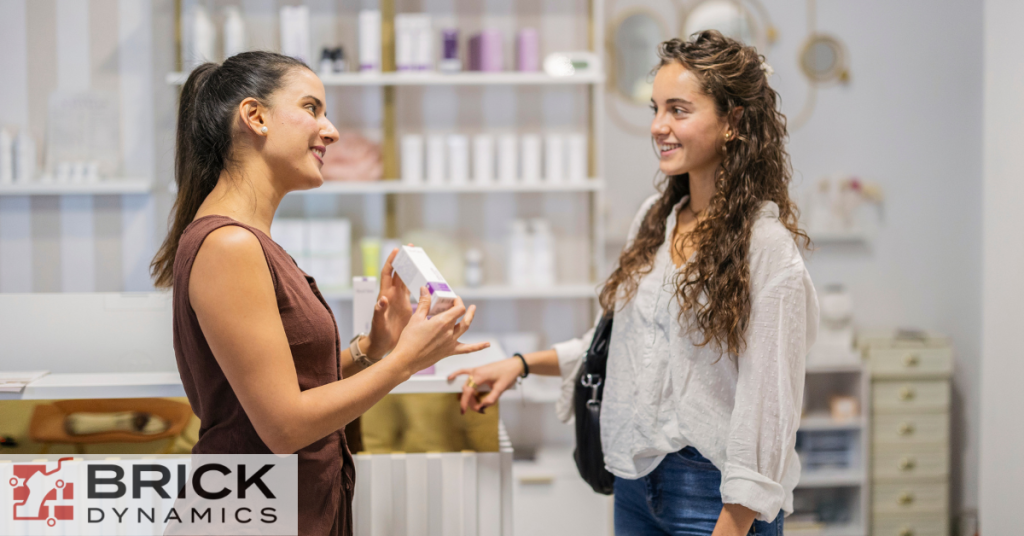
A beauty-focused pop-up shop is one of the most effective pop-up event examples for product launches and customer engagement. These pop-ups often feature beauty products, limited edition collections, and other beauty products displayed through interactive setups. In one activation supported by Brick Dynamics, a beauty brand launched a pop up store in a high-traffic retail location to introduce limited edition products. The team implemented interactive demos and social media touchpoints, which encouraged visitors to engage with the brand in real time. As a result, the pop up event saw a strong increase in foot traffic and customer engagement over the launch weekend. This approach helped the company generate buzz while testing demand in a new market.
Art & Interactive Pop-Up
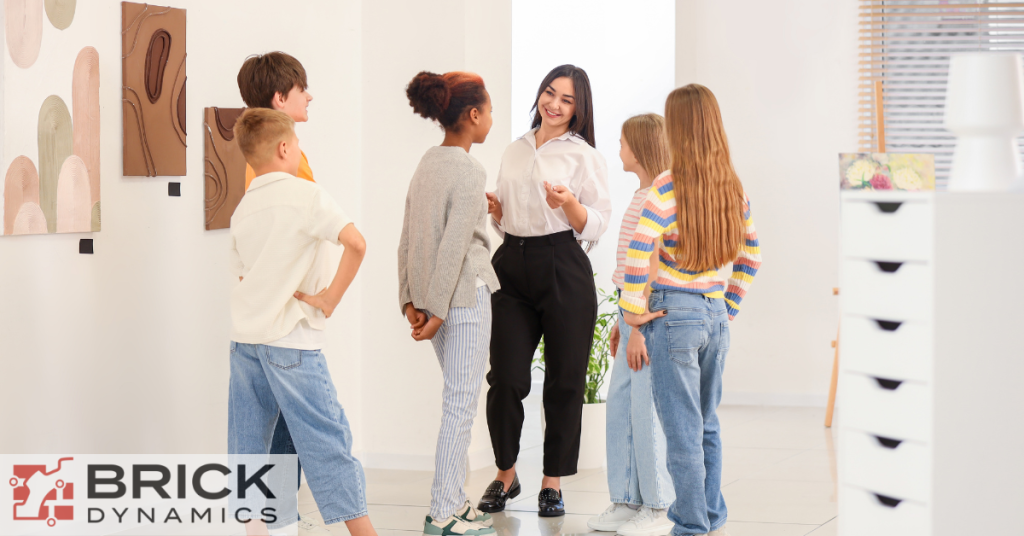
Art-driven pop-ups offer a unique way for brands to create excitement and connect with audiences in a meaningful way. These experiences often include wall display installations, live art, and immersive storytelling within a temporary space. A retail client working with Brick Dynamics transformed a physical store into an interactive art concept that attracted large crowds. The pop-up event encouraged visitors to explore the brand through creativity while building strong emotional connections. This type of creative pop approach leaves a lasting impression and strengthens brand awareness.
Mobile Pop-Up
Mobile pop-up shops provide a flexible and on-demand way for businesses to reach customers across multiple locations. These pop-up stores often use mobile devices and portable setups to bring products directly to their target market. In one activation, Brick Dynamics supported a company hosting a mobile pop-up event across several high-traffic areas during the summer. This strategy allowed the brand to connect with new audiences while keeping rental costs low. Mobile pop-ups are a powerful tool for businesses looking to explore new markets quickly.
Seasonal Pop-Up
Seasonal pop-up events are a popular choice for brands looking to align with specific moments, promotions, or product launches. These temporary activations often take place during summer or holiday periods to maximize foot traffic and consumer demand. A lifestyle brand partnered with Brick Dynamics to host a seasonal pop-up shop event in a unique location. The event created strong excitement and attracted large crowds within a short period. Seasonal pop-ups are an excellent way to build awareness while driving immediate sales.
How Do Different Pop-Up Strategies Compare?
Pop-up events vary widely in impact, and knowing how each format performs helps businesses make smarter decisions. The comparison below breaks down key pop up event examples based on goals, target audience, and execution approach. This makes it easier for brands to choose the right pop-up experience and align it with their overall marketing strategy.
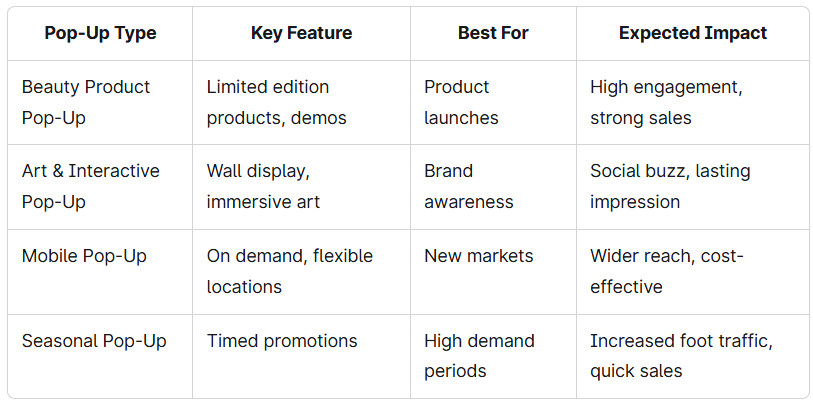
While each pop up event format offers unique advantages, there are important trade-offs to consider. Mobile pop-ups provide flexibility but may limit the depth of the customer experience, while art-driven pop-ups create strong engagement but often require higher setup costs. Seasonal pop-ups benefit from high demand but are limited to short timeframes, whereas beauty product pop-ups are ideal for launches but depend heavily on customer interaction. Understanding these differences helps businesses choose the most effective approach based on their goals and audience.
What Makes A Pop-Up Event Successful?
A successful pop-up event depends on planning, execution, and the ability to connect with customers in a meaningful way. High foot traffic alone does not guarantee success if the experience fails to engage visitors. As TJ Hennessy notes, “Execution is where most pop-up events succeed or fail, especially in high-pressure environments.” These insights highlight why strategy and preparation are critical for long-term success.
Marketing also plays a key role in ensuring a pop-up shop attracts the right audience and generates excitement before launch. Brands that combine social media promotion with local businesses and influencers often see stronger engagement. Research conducted by McKinsey Group shows that personalized and experience-driven marketing can reduce acquisition costs by up to 50% while increasing marketing efficiency by 10–30%. For example, a Brick Dynamics client used targeted campaigns to promote a pop-up event, resulting in significantly higher foot traffic. This proves that marketing efforts directly impact awareness, customer loyalty, and overall event success.
A well-executed pop-up experience also depends on adaptability during the event itself. Customer behavior can be unpredictable, especially in high-traffic locations or crowded environments. In one activation, Brick Dynamics managed real-time adjustments when crowds exceeded expectations, ensuring smooth operations. According to Brick Dynamics co-founder Thomas O’Brien, “Flexibility on-site is what allows brands to maintain quality experiences under pressure.” This ability to respond quickly helps create a lasting impression and ensures the event runs successfully.
How Do Pop-Up Events Work?
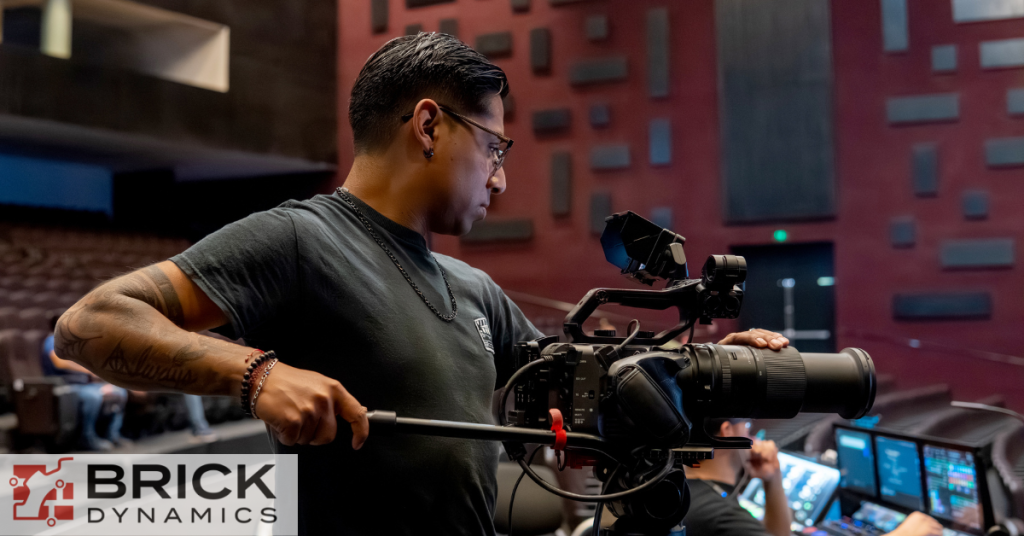
Pop-up events work by transforming a temporary space into a fully functional retail or brand experience within a short period. Unlike a permanent physical store, a pop-up event is designed to generate buzz, attract customers, and create immediate impact. These activations combine planning, promotion, and on-site engagement to deliver a seamless pop-up experience. Brands use pop-ups to test ideas, enter new markets, and connect with their target market in real-life environments. When structured properly, they become a powerful tool for driving foot traffic, awareness, and sales.
To guide execution, our team follows a structured approach like the P.O.P.S. Framework: Plan, Organize, Promote, Stage. This framework helps brands move from concept to execution while maintaining effortless logistics across each phase. Each stage focuses on key decisions that influence customer engagement, operational flow, and overall event success. It also allows teams to manage event logistics efficiently across different locations and timelines. This structure ensures pop-up events remain flexible while delivering consistent results.
P- Planning
The first step is planning, where businesses define their goals, audience, and overall pop-up concept. Brands decide whether the pop-up shop will focus on product launches, brand awareness, or testing demand in new markets. Data from the US Small Business Association shows that businesses that conduct structured market research are significantly more likely to succeed, with failure rates dropping by nearly 30% when proper planning is done. This stage also includes budgeting, timelines, and aligning the concept with the brand set. Strong planning ensures the pop-up event starts with clear direction and purpose.
O- Organizing
The next step is organizing, which includes location scouting and operational coordination. Businesses look for high-traffic areas, unique locations, and spaces that align with their target market. Research from the ICSC shows that well-positioned retail locations can increase customer visits by up to 20-40%. This phase also covers permits, staffing, and logistics planning to support smooth operations. Choosing the right physical space is critical to attracting visitors and maximizing visibility.
Design and setup also transform the physical space into an engaging pop-up experience that encourages visitors to explore. This includes wall display installations, signage, product placement, and interactive elements that create excitement. Many brands incorporate creative pop features, photo opportunities, and digital touchpoints using mobile devices. A well-designed pop-up store helps customers connect with the brand in a meaningful way. This stage plays a key role in creating a lasting impression and increasing customer engagement.
P- Promotion
Promotion focuses on generating buzz and building anticipation before the pop-up event launches. Brands use social media, local businesses, and partnerships to reach their audience and attract new customers. Campaigns often highlight limited-edition products, exclusive products, or unique experiences to drive demand. This approach encourages visitors to engage with the brand both online and in-person. Strong promotion ensures the pop-up event gains visibility and attracts the right audience.
S- Staging and Execution
The final step is staging and execution, where the pop-up event comes to life in a real-world setting. This includes managing event logistics, customer interactions, and on-site engagement throughout the event. Teams must monitor crowds, support staff, and ensure operations run smoothly in a temporary environment. A well-executed pop-up experience helps convert visitors into customers while boosting sales and brand awareness. This final stage ensures the event delivers measurable results and overall success.
Ready to Unlock the Potential of Pop-Up Events?
Pop-up events offer brands a flexible and cost-effective way to connect with customers, test ideas, and create memorable experiences in a rapidly changing retail landscape. Unlike standard guides that focus only on ideas, this blog combines real pop up event examples, structured frameworks, and operational insights drawn from real-world execution. By focusing on both strategy and effortless logistics, brands can create well-executed pop-up experiences that generate buzz, drive foot traffic, and deliver measurable success. If you are hosting a pop-up event, Brick Dynamics is a reliable logistics partner that provides operational support for your event. Connect with the team today to get started
Frequently Asked Questions
These are answers to common questions about planning, executing, and maximizing the impact of pop-up events.
What Are Some Examples Of Pop-Up Events?
Pop-up event examples include beauty product launches, art installations, mobile pop-ups, seasonal markets, and limited edition retail activations. These formats help brands create excitement, attract new customers, and test ideas in a short period.
How Can I Organize A Pop-Up Event?
Start by defining your goals, identifying your target market, and selecting a high-traffic location that aligns with your brand. Then plan logistics, design the pop-up experience, promote through social media, and execute with strong on-site engagement.
Are Pop-Up Events Effective For Marketing?
Yes, pop-up events are a powerful tool for building brand awareness, generating buzz, and engaging customers in real-life environments. They also allow businesses to test products, gather feedback, and connect with new audiences in a cost-effective way.
What Are The Key Elements Of A Successful Pop-Up Event?
A successful pop-up event requires a strategic location, engaging design, strong promotion, and smooth event logistics. Interactive elements, clear branding, and customer-focused experiences also help create a lasting impression and boost sales.
How Do Pop-Up Events Differ From Traditional Events?
Pop-up events are temporary, flexible, and designed to create immediate impact within a short period, unlike traditional events or permanent retail spaces. They focus more on experimentation, customer engagement, and generating excitement in unique locations.