Field Service Management Trends
Field service management trends are the new technologies and practices that help businesses improve productivity, service efficiency, and customer experiences. Field service managers now use AI and connected tech to pull real-time data, predict maintenance needs, and put mobile tools in technicians’ hands. These trends make it easier for businesses to manage teams, equipment, and operations.
At Brick Dynamics, we know field service technology only works as well as the physical operation behind it. We handle everything from coordinating inventory and warehouses to vehicles, technicians, installations, maintenance, and local field support across multiple markets. Our 65+ metro coverage gives businesses a practical foundation for expanding service operations while maintaining visibility and consistency. Contact us if you’re ready to explore the latest field service trends and turn them into real-world results.
In this blog, we’ll explain emerging field service management trends, the technologies driving them, and the opportunities they create for growing businesses.
What Are The Emerging Trends In Field Service Management?
As field operations get more complex, new technology is streamlining how companies handle the pressure. Field service used to mean juggling manual schedules, endless phone calls, spreadsheets, and reacting to problems as they landed. Technicians showed up with little information, while dispatchers scrambled to keep up with shifting schedules and customer needs.
That disconnect made it hard to deliver the quick, reliable service customers expect. The field service industry is taking a smarter approach now. Businesses are adopting connected devices, real-time data, and automation to simplify operations. These trends move field service away from reactive break-fix models and toward proactive maintenance.
Today’s Internet of Things (IoT) equipment gives you real-time updates on how your assets are performing. Cloud-based systems let your team access the information they need from wherever they work. AI can analyze that data to predict maintenance needs, improve scheduling, and optimize routes before issues surface. The shift helps businesses anticipate problems instead of chasing them.
Real-time visibility lets your teams coordinate everything from trucks to inventory and tasks across all locations. Use these technologies to reduce wasted trips, cut downtime, and use your resources better. If you are ready to expand or take on new markets, adopting these changes early can give you a real edge.
How Is AI Reshaping Field Service Operations?
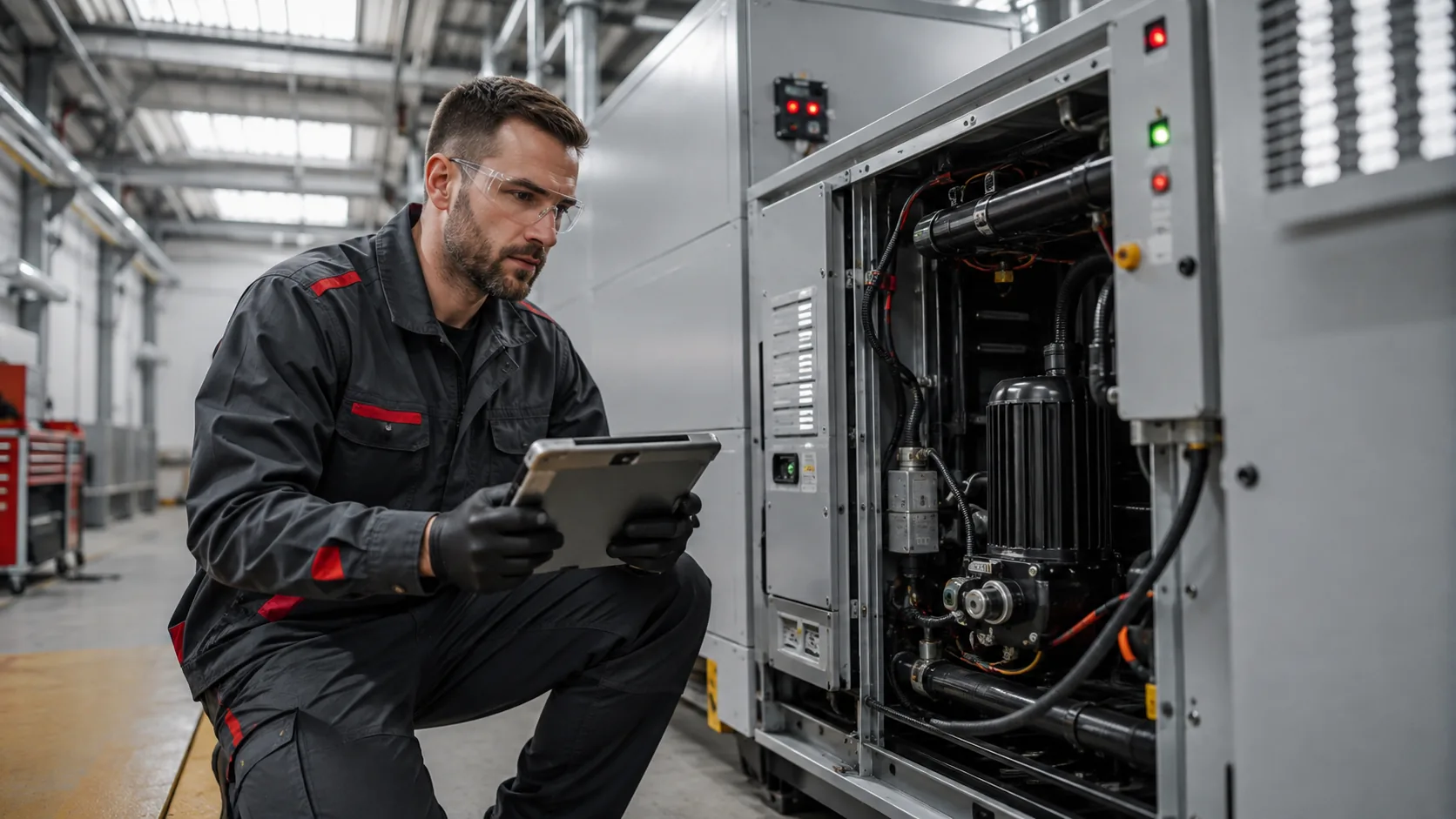
Artificial Intelligence and machine learning have made scheduling technicians, managing resources, and handling service requests far less painful. Geotab research found that 93% of field service companies are already using AI in some form, showing how quickly the technology is entering everyday operations. Smart scheduling matches technicians by skills, location, and job urgency, and it can reroute assignments when things change at the last minute.
Machine learning also scans equipment data for early warning signs, so teams fix issues before breakdowns happen. Businesses can then schedule service before equipment fails, which cuts downtime. As Thomas O’Brien, co-founder of Bricks Dynamics, says, “The companies winning in the physical world don’t build local operations the hard way anymore.” AI has moved well past basic chatbots and now helps with customer requests, parts coordination, customer updates, and job documentation. Automated systems can send appointment confirmations and accurate ETAs.
But rolling out AI is not simple, and it takes planning. Field teams need reliable customer and location data, solid training, and clear processes to trust and use new systems. Bad service data leads to bad recommendations, so people still need to oversee decisions that affect customers or equipment. Get your privacy and governance practices in order before bringing AI into all your field operations.
How Does IoT Help Field Service Businesses Deliver Predictive Service?
IoT sensors let equipment collect and share real-time data on performance, usage, temperature, pressure, and more. Connected assets give service teams remote visibility, which removes the need to send a technician to every site.
Monitoring these signals lets businesses catch issues early and fix problems before anything breaks down. PTC reports that IoT-driven predictive maintenance can reduce unplanned downtime by up to 30%. This means less waiting around for failures and more planned maintenance when it matters.
Things get interesting when you combine IoT data with AI and analytics. Together, they spot patterns, predict when gear needs attention, and help teams focus on priorities. Technicians go out only when needed, cutting extra trips and saving costs. Your most critical equipment stays up and running, and your customers get a service experience they can actually rely on.
How Do Mobile and Cloud Technologies Improve Field Service?
Field technicians need information right where the job happens, not just when they’re back at the office. Smartphones and tablets put digital work orders, customer records, equipment details, and service instructions right in the hands of field techs. They can send updates, snap photos, and chat with dispatchers instantly. Delays shrink, and everyone shows up better prepared. Mobile technology remains a key field service trend, with Microsoft reporting that about 75% of larger field service organizations had deployed or planned to deploy mobile apps.
Cloud-based FSM keeps information within reach for technicians, dispatchers, and managers alike. Field updates appear instantly in the office, so everyone stays in sync. Cloud platforms also centralize information, which makes it easier to coordinate schedules, inventory, customer details, and service history. That flexibility pays off when your business expands into new locations and manages larger field teams.
The bigger payoff comes when mobile tools and cloud systems connect your entire field operation. Dispatchers get real-time job tracking, technicians get fast updates, and managers get visibility across the board. Some platforms even work offline, letting technicians capture information without a connection and upload it later. Field and office teams work as one.
How Does Real-Time Data Improve Decision-Making in Field Service?
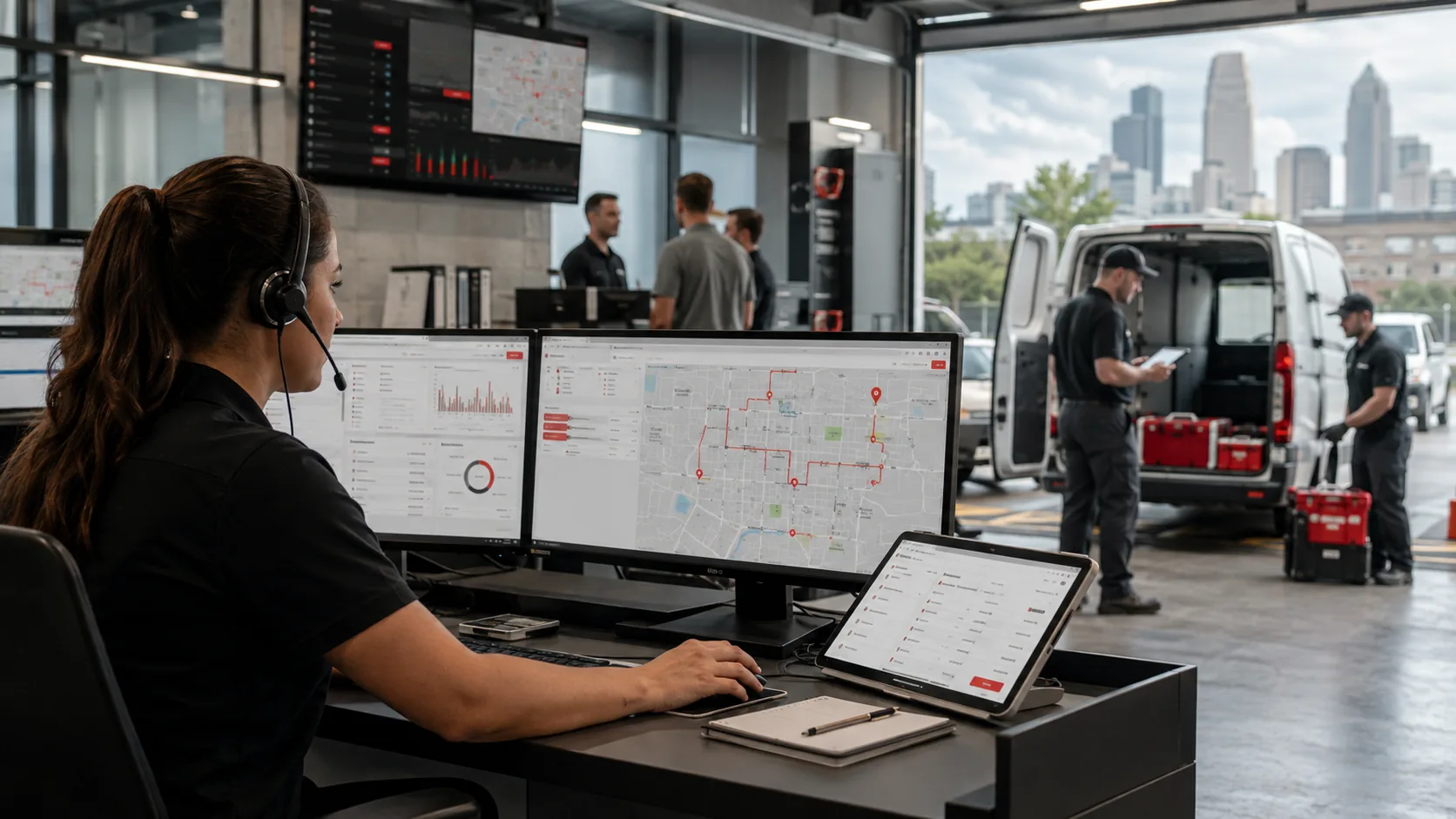
Real-time operational visibility lets field service managers see job details, resources, and performance instantly. No more waiting for end-of-day reports. Teams can track service trends, technician performance, job progress, then adjust resource allocation in the moment.
Predictive analytics pulls together everything you already know. It uses historical data, current trends, and real-time updates to forecast demand and spot changing patterns. Shores Salter, Senior Account Executive at Brick Dynamics, sums it up well: “combining technology with hands-on human support is the smart way for brands to scale their operations nationwide.”
Real-time insight leads to better decisions about routing, staffing, inventory, and other resources. Performance data highlights bottlenecks, balances workloads, and shows you where changes will have the biggest impact.
Route and resource optimization can account for factors such as technician location, job priority, traffic, and available capacity. For companies with field teams spread across several markets, connecting these insights makes it easier to decide where resources are needed and how to scale operations.
What Do Customers Expect From Field Service?
Customers now expect optimized field service operations. They want fast, convenient, hassle-free processes. Quick responses, real-time technician ETAs, and proactive updates are how you meet that. Automating feedback collection also boosts your review count and gives customers a voice.
Self-service customer portals and self-scheduling let people book appointments, check details, and resolve simple issues without needing a support call. These options reduce friction and give customers more control over their experience.
Remote troubleshooting adds another layer of ease, helping customers resolve suitable issues without waiting for an on-site visit. When a visit is necessary, clear communication can share the technician’s arrival window and relevant service details in advance. The experience becomes more predictable, service moves faster, and customers stay informed throughout. For businesses, better customer experiences can become a competitive advantage as service expectations keep rising.
How Are Remote Service and AR Changing Field Service?
Remote diagnostics let service teams look into equipment issues before sending someone out. Connected devices can share diagnostic info, and video troubleshooting lets technicians or customers show the problem from afar. If something needs extra expertise, virtual technician support connects onsite teams with seasoned experts in real time. These tools help teams decide whether a physical visit is needed and ensure the right people and parts are ready if it is.
Augmented reality takes remote support further by placing digital instructions directly over the equipment technicians are working on. AR-guided repairs can show procedures, component information, and visual instructions while technicians work through complex tasks.
The same technology can even help train new technicians. Allowing them to learn procedures in the field without always needing a classroom or a trainer at their side. By handling the right issues remotely and improving first-time fix rates, you cut unnecessary site visits, minimize travel, and keep everything running smoothly.
How Is Field Service Becoming More Sustainable?
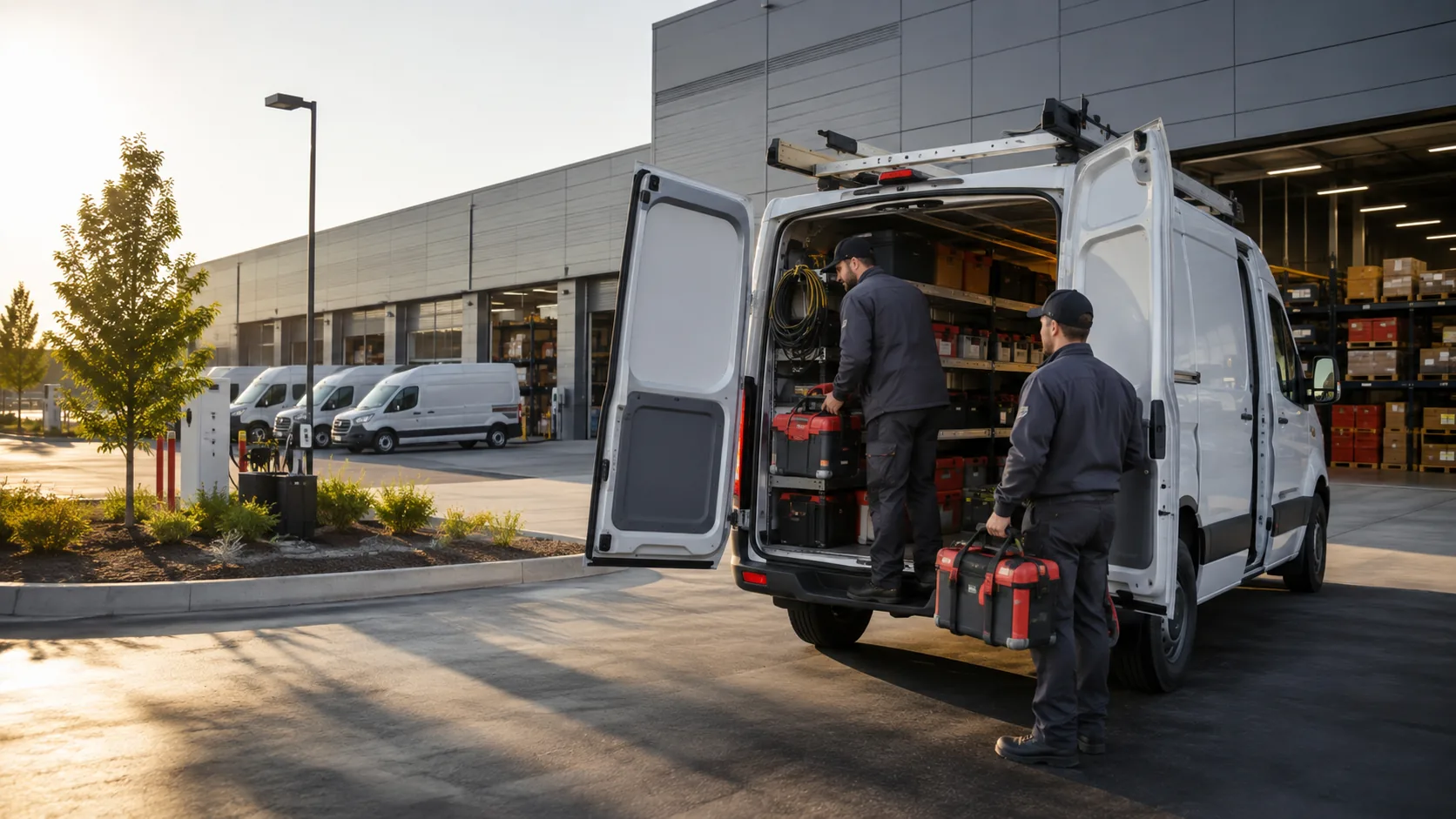
Sustainability is becoming a practical concern for field service teams managing large fleets and frequent customer visits. Smarter route planning cuts wasted miles by giving technicians the most efficient paths and grouping nearby jobs.
Every mile saved means lower fuel consumption, less wear and tear, reduced operating costs, and fewer vehicle emissions. The U.S. EPA recommends route optimization and better vehicle efficiency to curb transportation emissions, which is a big deal since transportation made up 28% of U.S. greenhouse gas emissions in 2022.
Switching to electric service vehicles helps businesses cut back even more on gas and diesel. The EPA notes that electric vehicles have no tailpipe emissions, though charging them can still create some, depending on the power source. But sustainability isn’t just about vehicles.
Optimizing inventory, deliveries, and warehouse operations helps reduce unnecessary trips and movement. By combining efficient routes, smarter fleets, and better logistics, field service companies can shrink their environmental impact while keeping costs down.
How is the Field Service Workforce Changing?
Field service teams are feeling the squeeze of tight labor markets and rising customer expectations. Give technicians the right mobile tools, and they spend less time hunting for information or handling routine tasks. AI assistance can help retrieve information, document jobs, and handle repetitive admin work so technicians can focus on skilled service.
Even the best tools need a workforce that knows how to use them. Field service leaders at Field Service East emphasized continuous training as technology and service methods evolve. Practical, hands-on training is what builds technician confidence with new tools without slowing anyone down. A connected workforce isn’t only about efficiency; it should also keep workers safer through better job info, clear safety steps, and real-time support.
The technician experience matters. A well-supported team delivers better service. AI, mobile tools, and connected systems cut down on paperwork, boost knowledge sharing, and help techs show up ready for any job. For businesses looking to scale, investing in the workforce means providing the right tools, training, and support so technicians can do their best work.
How Are Field Service Platforms Becoming More Connected?
Field service rarely operates as a standalone function, especially as businesses grow across different locations. Integrating FSM platforms with CRM and ERP systems gives everyone a single view of customers, work orders, billing, assets, and operations. Inventory integration makes it easy to check part availability before scheduling a job. Fleet and logistics integrations connect vehicles, deliveries, and field activities so that teams can coordinate every service request efficiently.
FSM platforms are now using APIs to make these connections easier. Letting different systems exchange information means you are not stuck inside one platform. Rather than jumping between disconnected tools, teams can work from one set of operational data and make smarter decisions.
Managers get a full view of jobs, inventory, vehicles, and field activity, which makes it easier to track what is happening across the field service business. For companies entering new markets, integrated systems give every location a consistent way to work and remove the need for each branch to reinvent the process.
Field service scheduling is more than dispatch software. People, inventory, vehicles, warehouses, and local infrastructure are all essential for getting the job done. That is where Brick Dynamics comes in, offering local warehousing, inventory management, fleet operations, installations, maintenance, repairs, and last-mile execution to support modern FSM technology. Linking digital insights with hands-on operations is how businesses build more scalable field service models.
How Can Businesses Prepare for Emerging FSM Trends?
Preparing for new trends in field service management starts with identifying where your current operations struggle. Look for bottlenecks in scheduling, dispatch, inventory, technician workloads, customer communication, or service delivery. Automate the routine or most costly tasks first instead of chasing every new technology on the market.
Make sure technicians have mobile tools that put the right information in their hands while they’re out in the field. Track performance with clear metrics, like response times, first-time fix rates, technician utilization, service costs, and customer satisfaction, so you can tell whether new processes are actually helping or just adding new problems. Regular performance reviews make it easier to adjust your approach as customer needs and service demands evolve.
Technology is only part of preparing for the future. Businesses need flexible local operating capacity, especially when expanding into new markets or managing distributed field teams. That may include access to warehouses, inventory, vehicles, technicians, and local support without building everything from scratch.
Human oversight should remain part of important decisions, particularly when AI affects customers, workers, or critical equipment. The strongest FSM strategies combine smart technology with skilled people and reliable physical operations.
What Do the Latest Field Service Management Trends Mean for Businesses?
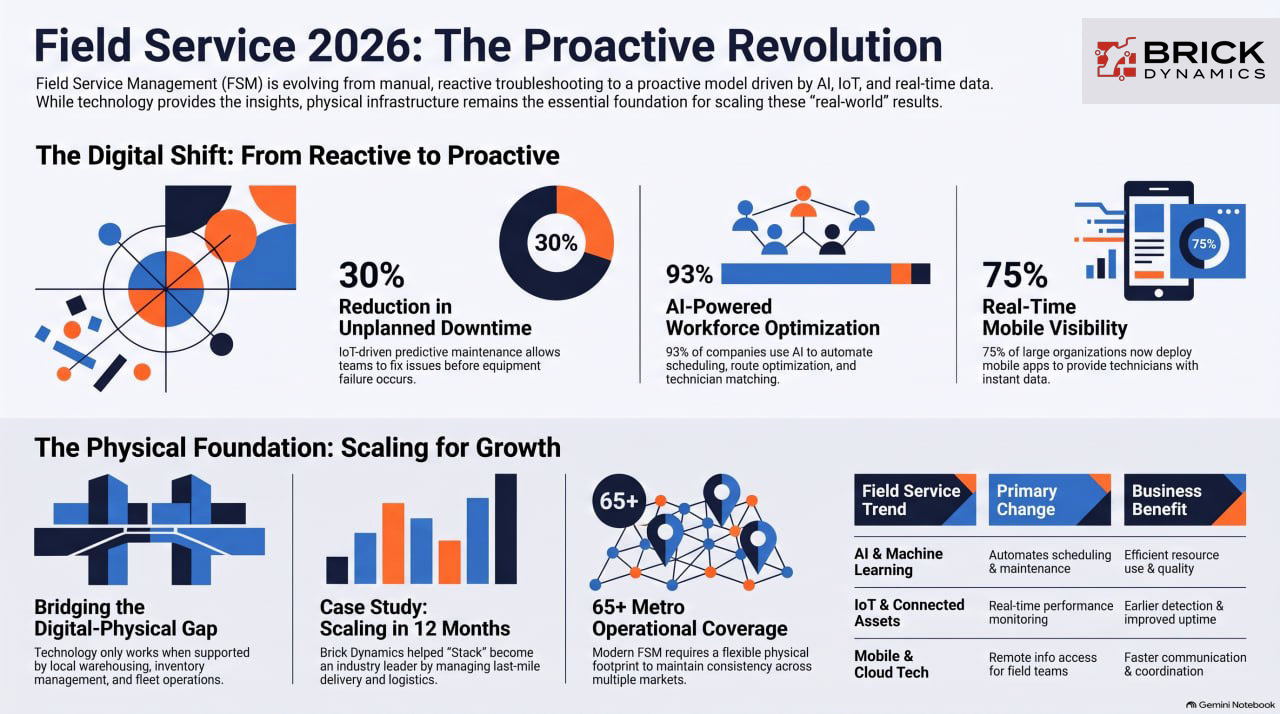
Field service is changing across technology, workforce management, customer experience, and physical operations. The table below summarizes the main trends and what each means for businesses. Use it as a quick reference when deciding which areas deserve attention first.
|
Field Service Trend |
What It Changes |
Business Benefit |
|
AI and Machine Learning |
Automates scheduling, dispatch, maintenance planning, and repetitive workflows |
Efficient resource use and service quality |
|
IoT and Connected Assets |
Provides continuous equipment and asset data |
Earlier problem detection and improved uptime |
|
Mobile and Cloud Technology |
Gives field teams access to information from anywhere |
Faster communication and better coordination |
|
Real-Time Data and Analytics |
Tracks customer demands, performance, service trends, and resources |
More informed decisions and enhanced operational efficiency |
|
Customer Experience |
Adds proactive communication, self-service portals, and greater service visibility |
Higher customer satisfaction. Companies with better communication see higher customer retention rates. |
|
Remote Service and AR |
Supports remote diagnostics, virtual assistance, and guided repairs |
Fewer unnecessary site visits and faster troubleshooting |
|
Sustainable Field Operations |
Improves routing, fleet efficiency, and inventory practices |
Lower travel costs, fuel use, and environmental impact |
|
Connected Field Workforce |
Gives technicians mobile tools, AI remote assistance, and better training |
Less administrative work and stronger technician support |
|
Integrated FSM Platforms |
Connects field service with CRM, ERP, inventory, and logistics systems |
Better visibility across the entire operation |
|
Flexible Local Operations |
Connects technology with warehouses, vehicles, inventory, and field teams |
Easier expansion into new markets |
How Did Brick Dynamics Help Stack Scale Its Field Operations?
Case Example: Consider Stack, a company that rents out reusable plastic moving bins and dollies. As Stack grew into new markets, they quickly realized they needed more than a digital platform. Local inventory, delivery, customer communication, and solid field support all became essential.
That is where Brick Dynamics stepped in, taking on key operational tasks like last-mile delivery and customer feedback. With the logistics covered, Stack’s founders could focus on growth, strategy, and building strong customer relationships. According to Brick Dynamics, this partnership helped Stack leap from startup to industry leader in just 12 months.
The example shows why modern field operations need more than software. Technology can coordinate work and provide visibility, but businesses still need people, inventory, vehicles, and local execution to get the job done. Brick Dynamics combines those physical capabilities with technology, giving businesses a way to expand their field presence while keeping local operations coordinated and scalable.
How Does Brick Dynamics Support Businesses as Field Service Evolves?
Brick Dynamics makes it easier for businesses to implement emerging field service trends by bridging the gap between technology and hands-on operations. As TJ Hennessy, Co-Founder of Brick Dynamics, usually says, “The right warehouse partner doesn’t just store your products. They help your business move faster and grow smarter.”
From AI and IoT to mobile tools and real-time data, new tech is reshaping field service and raising customer expectations. We help you adapt by handling local field operations, local warehousing, inventory, first and last-mile logistics, fleet management, installations, maintenance, repairs, cleaning, charging, retrieval, and on-demand support.
With real-time visibility, streamlined work management, and API integrations, we connect your field activity to your existing systems and workflows. This makes it easier to respond to changing demand, support your technicians, manage resources, and deliver consistent service across markets.
With operations across 65+ U.S. metros, Brick Dynamics helps businesses expand their field presence with reliable local infrastructure. Our teams across the country handle the physical work behind your field service strategy, from inventory and logistics to installations and on-demand support. Ready to put your field service plans into action? Reach out to us today.
Frequently Asked Questions
Field service management is evolving fast as businesses embrace AI, connected tech, mobile tools, and real-time data. Here are answers to common questions about these trends and what they mean for companies planning their next phase of growth.
What Are the Top Field Service Management Trends in 2026?
In 2026, field service management focuses on AI, predictive maintenance, IoT, mobile tech, real-time analytics, field service automation, remote service, and integrated platforms. Customer experience, workforce optimization, and sustainability are also taking center stage.
How Is AI Changing Field Service Management?
AI is improving field service management through smarter scheduling, predictive maintenance, route optimization, and workflow automation. It helps teams reduce delays, give technicians better information, and improve scheduling and resource allocation.
What Role Does IoT Play in Field Service Management?
IoT connects your equipment and sensors to field service systems, giving you real-time performance data. This makes it easier to monitor assets, spot issues early, and schedule maintenance before problems arise.
How Does Mobile Technology Improve Field Service?
Mobile technology puts real-time work orders, customer details, equipment info, and service updates right at technicians’ fingertips. It also makes it easier to stay in touch with dispatchers and helps teams tackle jobs faster and more efficiently.
How Does Data Analytics Improve Field Service Management?
Data analytics makes it easier to spot service trends, predict demand, track technician performance, and use resources wisely. By turning field data into clear, practical insights, you can make smarter decisions every day.
How Are Customer Expectations Influencing Field Service Trends?
As customer expectations rise, businesses are under pressure to respond faster, communicate proactively, offer more personalized service, and provide greater visibility. People want easy scheduling, real-time updates, and service they can count on every time.
What Are the Sustainability Trends in Field Service Management?
Sustainability is all about working smarter and greener. Trends like route optimization, electric vehicles, reduced fuel use, efficient fleet management, and smarter inventory practices help cut emissions, waste, and costs while also minimizing unnecessary travel.