Field Marketing Strategy
Digital marketing is everywhere, but nothing beats a real conversation, a product demo, or the energy of a live event. If you’re a business looking for a more effective marketing strategy, field marketing creates those in-person moments that foster trust and set brands apart through events, pop-ups, and other face-to-face experiences. In a world full of online noise, these personal connections are what truly drive lasting impact.
At Brick Dynamics, we help businesses bring their field campaigns to life. We offer local warehousing and delivery, as well as field operations and asset recovery. With a network spanning 65+ U.S. markets, we make it easy to get your materials, equipment, and assets wherever your activations happen. Whether you’re planning a single local event or a multi-market campaign, we’re here to take the operational load off your shoulders. Reach out and let’s talk about how we can support your next field marketing strategy.
In this blog, we’ll break down what field marketing strategy really means, why it matters, some tried-and-true ways to win, and how you can measure results.
What Is Field Marketing?
There are countless ways to market a business, but this style of marketing stands out for one simple reason: field marketing creates opportunities that put brands face-to-face with real people. Instead of relying on online channels, field marketing focuses on direct, in-person engagement: think events, product demos, pop-ups, trade shows, street teams, and local activations. The goal isn’t just to get noticed; it’s to spark real conversations, show value up close, gather honest feedback, and help move people toward making a purchase.
Field marketers make these personal interactions happen, from planning to execution. They figure out who to reach, where to go, and how to make each event count. That means coordinating logistics, training teams, managing promo materials, engaging prospects on the spot, capturing leads, and measuring results. They also team up with sales and operations, making sure leads get a quick follow-up, and every piece of the campaign lands exactly where it needs to be.
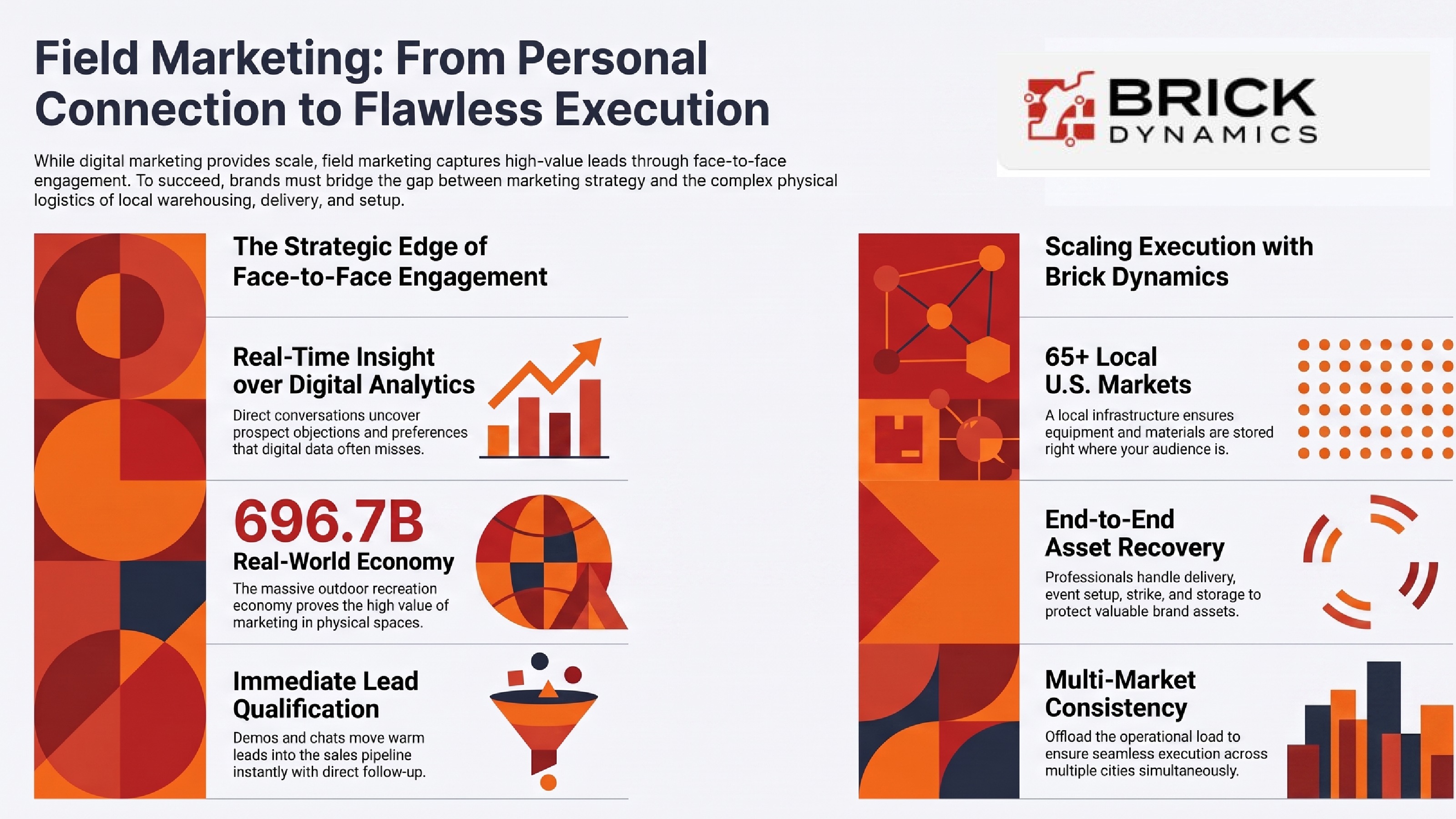
Field marketing shines because real conversations reveal insights that digital analytics can miss. A quick chat with a prospect can uncover questions, objections, or preferences in the moment, letting marketers respond right away. It’s also a chance to create memorable experiences and truly understand local audiences. For brands running campaigns in multiple markets, operational support is key. Brick Dynamics steps in to handle local warehousing, delivery, field ops, and asset recovery so physical campaigns run smoothly.
What Is the Role of Brick Dynamics in Field Marketing?
According to Thomas O’Brien, co-founder at Brick Dynamics, “A strong field marketing campaign still depends on the physical work happening behind the scenes.” This is where Brick Dynamics comes in. They can support winning field marketing strategies by handling the heavy lifting that keeps campaigns running smoothly across local markets, from warehousing and inventory staging to delivery, event setup, asset pickup, and on-the-ground support. This allows marketing teams to focus on connecting with customers effectively.
Local operations aren’t just a nice-to-have; they’re essential. A successful field marketing campaign is all about getting the right people, products, and promo materials to the right place at the right time. One late delivery or missing display can throw off an entire campaign. That’s why Brick Dynamics built a local infrastructure in over 65 U.S. markets, helping brands store, move, deploy, and recover assets right where their audiences are.
Field marketing is changing fast. It is becoming more connected, targeted, and measurable. Businesses now use pop-ups, local partnerships, event activations, and interactive experiences to build stronger customer interactions. These campaigns go hand in hand with digital promotion, data collection, and follow-up. That blend makes dependable local operations more important than ever, especially for brands running programs in multiple markets.
Field Marketing vs. Other Marketing Disciplines
Field marketing bridges the gap between traditional and digital. It blends the personal touch of in-person marketing with the precision of other marketing initiatives. While traditional marketing activities use TV, radio, and print, and digital uses online channels and data, event marketing puts brands face-to-face with prospective customers.
Each method has its perks. Traditional marketing is great for broad reach, digital shines with targeting and scale, and field marketing wins with real engagement and instant feedback. Field campaigns take more work, but for the right audience, the impact is worth it. Below, you’ll see a quick comparison of how different options stack up in execution, engagement, and cost.
| Marketing Strategy | Primary Approach | Customer Engagement | Main Strength | Best Suited For |
|---|---|---|---|---|
| Field Marketing | In-person, localized activities | Direct, face-to-face interaction | Personal engagement and immediate feedback | Targeted customer engagement, lead generation, and local campaigns |
| Digital Marketing | Online channels and platforms | Online interactions | Broad reach, precise targeting, and measurable performance | Brand perception, lead generation, and reaching large audiences |
| Event Marketing | Conferences, trade shows, and hosted events | Face-to-face interaction | Networking and concentrated audience engagement | Lead generation, networking, product launches, and industry engagement |
| Experiential Marketing | Immersive brand experiences | Highly interactive and memorable | Strong brand recall and emotional connection | Brand awareness, product experiences, and customer engagement |
Every marketing style has its own strengths, but field marketing differs by making real, personal connections. If you want to truly engage your audience and not just reach them, field marketing is worth exploring alongside your digital and traditional efforts.
What are the Unique Benefits of Field Marketing?
With field marketing, you can meet customers face-to-face, have real conversations, and learn what matters to them. It’s a chance to build trust, boost brand loyalty, and find quality leads—things online alone can’t always deliver. If you want deeper connections, field marketing stands out. Here are five key benefits:
Direct Customer Engagement
Face-to-face conversations let businesses truly get to know their existing customers, far beyond digital stats. Field marketing reps can talk with people, hear their concerns, and show firsthand how a product solves their problems. Product demos help customers see things in action, making new ideas easier to grasp and remember.
These in-person chats also mean customers get instant answers to their questions, no waiting for emails or digging through websites. Field teams can respond right away, tailor their message, and make sure people feel heard. At the same time, businesses gain real insight into what matters to their audience.
Immediate Feedback and Real-Time Adjustments
Field marketing lets businesses hear customer concerns in real time. When prospects question price, features, or fit, teams get valuable insight into what might hold them back. These honest chats often reveal issues that surveys and analytics miss, helping marketers learn where to clarify or rethink their approach.
This feedback shapes the campaign as it happens. Teams can tweak messaging or offers on the spot when they spot common questions. These lessons not only improve current efforts, but also guide future campaigns so they truly connect with what customers want.
Stronger Brand Experiences
Letting customers see, touch, or try a product makes it easier to understand. Demos answer questions that ads or websites can’t, while great experiences help people connect with the brand. When an interaction is useful and memorable, customers are more likely to remember the company and return later. Over time, these moments build stronger brand recall and a bigger presence in the market.
Local Market Insights
Field marketing gives businesses a real feel for how customers behave in different markets. Meeting people face-to-face helps teams spot local preferences and see what really connects. Teams can size up local competitors and learn what shapes buying decisions. Most importantly, these direct chats reveal market-specific concerns that big-picture research often misses, so businesses can fine-tune their message for each area.
Lead Generation and Sales Opportunities
Field marketing puts businesses face-to-face with their ideal customers, turning real conversations into sales opportunities. Teams can capture leads during demos and future events, book meetings with interested prospects, and let people try products before they decide. With good follow-up, these connections move warm leads into the sales pipeline, giving sales teams a head start.
What Are the Most Effective Field Marketing Tactics?
It starts by finding your ideal audience. Use data from CRMs, surveys, web analytics, and social media to spot your key segments. Factors such as location, industry, and buying habits reveal where and how to reach people. This helps you pick the best spots and craft messages that actually matter to your audience.
Outdoor recreation contributed $696.7 billion to the U.S. economy in 2024, according to the Bureau of Economic Analysis. This figure shows how much economic activity happens in physical settings where brands can reach potential customers directly.
Sales reps need to know the brand, speak with confidence, answer questions, and capture leads. Good training keeps messaging sharp but lets conversations flow naturally. Clear goals, such as leads collected or demos done, make it easy to measure success.
Interactive displays make field marketing more engaging. People can explore, not just listen. Touchscreens, demos, and immersive setups help customers experience products firsthand and spark questions or trials. These tools are great for capturing leads on the spot. For larger campaigns, Brick Dynamics can handle logistics such as local storage, delivery, and setup.
How to Create a Field Marketing Strategy
A great field marketing strategy starts with a clear goal and a simple, practical plan for reaching the right people. Don’t overthink it; just make sure every campaign has a clear purpose, a defined audience, a budget, and a way to measure success.
Step 1: Define Your Marketing Goals
First, decide what you want your campaign to achieve. Maybe you want to generate leads, boost brand awareness, break into a new market, or get people to try your product. Having clear goals makes it much easier to pick the right tactics and see if your campaign worked.
Step 2: Identify Your Target Audience
Before you pick where and how to reach people, get clear on who you want to target. Think about their demographics, location, interests, buying habits, and pain points. The more you know, the easier it is to focus your campaign on the people most likely to respond.
Step 3: Choose the Right Field Marketing Tactics
Choose tactics that fit your audience and your goals. Product demos, pop-ups, trade shows, sampling, street teams, local events, or community partnerships can all work. Just pick the activities that will make your audience want to stop, interact, and learn more.
Step 4: Select the Right Markets and Locations
Location can make or break your campaign. Aim for places where your target customers already spend time and where your brand can grow. Consider local events, foot traffic, competition, customer density, and what you’ll need to make the campaign run smoothly.
Step 5: Set Your Budget and Resources
When planning your budget, think beyond just venues and staff. Don’t forget about promo materials, transportation, equipment, tech, permits, and even post-campaign activities. A realistic budget helps you avoid headaches later on.
Step 6: Plan the Campaign Logistics
Figure out how you’ll get materials, equipment, and staff to each location. If you’re working in multiple markets, local storage and transportation can make things easier. The more you plan up front, the more your team can focus on customers, not on missing supplies.
Step 7: Prepare Your Field Team
Your team is the face of your brand. Train them on your product, key messages, common customer questions, lead capture, and campaign goals. Give enough direction for consistency but let their conversations feel natural and authentic.
Step 8: Launch and Engage Your Audience
When you’re ready, launch your campaign. Encourage your team to have real conversations, answer questions, show off your product, and gather useful info from customers. Listen closely; those chats can reveal objections and new opportunities.
Step 9: Measure the Results
Track the numbers that matter most to your goals, like foot traffic, customer interactions, leads, product trials, conversions, or sales. Focusing on the right metrics shows you if your campaign paid off.
Step 10: Refine the Strategy
Your field marketing strategy should get better every time. Review feedback, team notes, lead quality, costs, and results. Use what you learn to fine-tune your messaging, locations, and tactics for your next campaign.
How Does Field Marketing Help Reach Target Audiences Effectively?
Field marketing brings your brand right to your target audience. You can shape messages, offers, and demos to fit what people actually want. Local in-person events and partnerships help your brand positioning and make your brand feel like part of the community.
According to the U.S. Census Bureau, there were over 8.3 million business establishments across the U.S. in 2023. This scale increases the need to build local partnerships, host events, and connect with customers where it counts. These real, personal connections build stronger relationships and keep customers coming back.
Top field marketing strategies also give you valuable feedback about what works and what doesn’t. Teams can gather questions, track engagement, and see which spots get the best response. You can use these insights to tweak your message, target the right people, and choose the best locations so every campaign performs better than the last.
How Does Field Marketing Support Sales?
Field marketing helps sales by bringing your brand straight to potential buyers. Real conversations, hands-on demos, and local events let people ask questions and get to know your product before they decide. These one-on-one moments help your team spot qualified leads, set up meetings, and move prospects further down the sales funnel. When sales and field marketing work toward the same goals, marketing activities can directly drive revenue.
But the job isn’t done when the event wraps up. Sales teams should follow up with qualified leads while the conversation is still fresh and use feedback to tailor their approach. Tracking meetings, opportunities, conversions, and revenue helps you see which campaigns are really paying off. This close connection between field marketing and sales helps you build better customer relationships and grow revenue.
What Are the Key Components of a Successful Field Marketing Strategy?
Great field marketing starts with clear goals and smart research. Decide what you want—more leads, stronger brand awareness, product trials, or entry into a new market—and pick KPIs to track your progress. Market and competitor research reveal what customers want, what’s happening locally, and where you can stand out.
The real magic happens in execution. Your messages and offers should solve real customer needs and give them a reason to care. Field teams who know the campaign, chat naturally, and listen closely can turn demos, samples, and conversations into memorable moments.
Measuring results tells you what’s working and what to improve. Track things like leads, conversions, trials, event turnout, engagement, immediate sales, and cost per lead. Tools like CRMs, lead capture apps, and surveys help you collect and compare the data, so you can see your ROI and decide where to invest next.
Field Marketing Example
A successful field marketing strategy ties every activity to a clear business goal. Let’s say your company is moving into a new city; you might focus on reaching local decision-makers with pop-up demos, community events, and hands-on product experiences.
By combining well-trained staff, lead capture, and thoughtful follow-up, you can build real connections and gather valuable feedback. Tracking leads, meetings, conversions, and revenue will show you if your approach is making an impact.
Field Marketing Strategy Example: Let’s look at how this works in action. Picture a software company gearing up to launch in three new markets. Their goal? To generate qualified leads and get their product in front of local decision-makers. They pinpoint their target audience and use pop-up demos and local events for those valuable face-to-face conversations.
Brick Dynamics steps in to handle logistics, storing promo materials, coordinating transport, prepping each location, and picking up assets afterward. By tracking attendance, leads, meetings, conversions, and campaign costs, the team can see what’s working and decide where to invest next.
How Brick Dynamics Supports Field Marketing Operations
Field marketing isn’t just about big ideas; it’s about getting all your stuff where it needs to go. Brick Dynamics handles the heavy lifting, like local warehousing, delivery, event support, and asset recovery, so campaigns run smoothly.
1. Local Warehousing and Inventory Management
Brick Dynamics stores your materials close to your campaign sites, organizing and prepping inventory for quick deployment. Keeping assets nearby makes distribution simple and cuts down on wasted trips between markets.
2. Delivery and Transportation
Timing matters. Brick Dynamics handles first- and last-mile delivery, moving your equipment and displays between facilities and event locations. It also coordinates moves across cities when needed.
3. Event Setup and Strike
Setting up and breaking down events eats into your team’s day. Brick Dynamics delivers, sets up, and retrieves everything you need, so your team can focus on customers, not logistics.
4. Multi-Market Campaign Support
Multi-city campaigns need consistency and local know-how. As Thomas O’Brien puts it, “When campaigns expand across markets, consistent local execution becomes just as important as the marketing strategy.” Brick Dynamics covers 65+ U.S. markets, coordinating everything so your campaign feels seamless everywhere, with local support tailored to each market.
5. Reverse Logistics and Asset Recovery
Your marketing assets are valuable; don’t let them go to waste. Brick Dynamics retrieves, stores, and returns your materials for future use, saving money and keeping you ready for the next campaign.
Need a Field Marketing Strategist?
Are you a business looking for a more effective marketing strategy? Field marketing events connect businesses with customers through real-world experiences like events, demos, pop-ups, and local partnerships. Success starts with the right operational support, well-trained teams, and smooth logistics. As TJ Hennessy, a team member at Brick Dynamics, believes, “The best field marketing programs connect a strong customer experience with reliable local operations.”
Track leads, engagement, and feedback to see what works. If you want deeper customer relationships to go with your digital strategy, field marketing is a great addition. Field marketing is now more digital and interactive than ever. It uses tech to capture leads, track results, and learn what your customers want.
Our team helps businesses turn field marketing plans into physical campaigns across local markets. Our local operations network supports warehousing, delivery, field support, event setup, and asset recovery across 65+ U.S. markets. Ready to put your field marketing strategy into action? Talk to Brick Dynamics about the local support your campaign needs.
Frequently Asked Questions
Field marketing can involve many moving parts, from choosing the right tactics to measuring campaign results and managing logistics. These frequently asked questions cover the basics of field marketing strategy, its benefits, and how businesses can put it into practice.
What Is a Field Marketing Strategy?
A field marketing strategy is a plan to engage target customers through in-person activities such as events, demonstrations, pop-ups, and local activations. It outlines the audience, tactics, locations, goals, and metrics used to attract and convert prospects.
How Can You Benefit From Implementing a Field Marketing Strategy?
Businesses can use field marketing to improve brand strategy, engage potential customers directly, and generate qualified sales opportunities. They can also use customer feedback from these interactions to refine their messaging and strengthen relationships in target markets.
What Are Some Examples of Field Marketing Tactics That You Can Utilize?
Brands can use tactics such as pop-up events, industry events, product demonstrations, local partnerships, and targeted community activations. These activities can help the company engage potential customers directly, build brand awareness, and generate qualified leads.
How Can Businesses Measure the Success of Their Field Marketing Efforts?
Businesses can measure field marketing success by tracking foot traffic, qualified leads, conversions, sales, customer feedback, and social media engagement. Comparing these results with campaign costs can also help determine ROI and identify which tactics deserve further investment.
How Should Brands Align Their Field Marketing Strategy With Their Overall Marketing Goals?
Brands should align field marketing with their broader goals by targeting the right audiences, maintaining consistent messaging, and choosing tactics that support specific objectives. Connecting field activities with digital campaigns, sales outreach, and follow-up also helps turn physical interactions into measurable marketing results.